Unlock the Mysteries of the Stars
Explore Ancient Egyptian Astrology
Delve into the celestial wisdom of Ancient Egypt and uncover the secrets that have guided civilizations for millennia.
The Legacy of Egyptian Astrology
Ancient Egyptian astrology is a profound system that connects the celestial realm with the earthly plane. Rooted in the rich traditions of Kemet, it reflects the Egyptians' deep understanding of the cosmos and its influence on human destiny. This ancient practice was integral to their culture, guiding everything from agriculture to spiritual rituals.
By studying the stars, the ancient Egyptians developed a calendar and zodiac system that remains influential today, offering insights into personality, fate, and the divine order of the universe.
12 Egyptian Zodiac Signs and Their Meanings
The Egyptian zodiac connects twelve signs with powerful deities and sacred symbols associated with ancient Egyptian religion. Unlike the familiar Western zodiac, these signs are represented by figures such as Amun Ra, Isis, Osiris, Horus, Anubis, Bastet, and Sekhmet, along with the Nile.
Today, Egyptian astrology is often used as a way to explore personality traits, spiritual symbolism, and the characteristics traditionally associated with these ancient deities.
It is important to distinguish this popular modern system from historically documented ancient Egyptian astronomy and astrology. Ancient Egyptians carefully observed the Sun, Moon, planets, stars, and constellations and used celestial knowledge for calendars, religious ceremonies, timekeeping, and understanding the divine order of the cosmos. However, the exact birth date system presented below should not be treated as a firmly documented ancient Egyptian zodiac calendar.
With that distinction in mind, here are the 12 Egyptian zodiac signs and their meanings.
1. The Nile
Dates: January 1 to 7, June 19 to 28, September 1 to 7, November 18 to 26
The Nile is unique among the Egyptian zodiac signs because it represents a sacred natural force rather than a deity. The river was essential to life in ancient Egypt, providing water, fertile soil, transportation, and resources that helped Egyptian civilization flourish.
People associated with the Nile zodiac sign are described as peaceful, practical, observant, and intuitive. They often prefer harmony over conflict and are believed to possess a thoughtful approach to difficult situations.
Common traits: Peaceful, logical, practical, intuitive, observant
2. Amun Ra
Dates: January 8 to 21, February 1 to 11
Amun Ra represents one of the most powerful divine traditions in ancient Egyptian religion. Amun became particularly important during the New Kingdom and was closely associated with Ra, the great solar deity.
People born under the Amun Ra zodiac sign are traditionally described as confident, optimistic, intelligent, and natural leaders. They are believed to inspire others while remaining focused on their goals.
Common traits: Confident, optimistic, ambitious, decisive, charismatic
3. Mut
Dates: January 22 to 31, September 8 to 22
Mut was an important mother goddess (mother of the world) whose name can be translated as "mother." She became particularly prominent at Thebes and was associated with queenship, motherhood, and divine protection.
Those associated with the Mut zodiac sign are described as caring, loyal, generous, and protective. They may form strong emotional connections and place great importance on the wellbeing of the people they love.
Common traits: Loyal, affectionate, protective, sensitive, generous
4. Geb
Dates: February 12 to 29, August 20 to 31
Geb was the ancient Egyptian god associated with the Earth. In Egyptian cosmology, he was commonly paired with Nut, the goddess of the sky.
People associated with the Geb zodiac sign are believed to be sensitive, dependable, thoughtful, and emotionally aware. They may appear reserved at first but often develop strong and lasting relationships.
Common traits: Reliable, sensitive, thoughtful, persistent, compassionate
5. Osiris
Dates: March 1 to 10, November 27 to December 18
Osiris was one of ancient Egypt's most important deities. He was associated with death, resurrection, regeneration, fertility, and kingship in the afterlife.
Those born under the Osiris zodiac sign are traditionally characterized as determined, independent, intelligent, and strong willed. They are often portrayed as people who can recover from setbacks and continue pursuing their ambitions.
Common traits: Independent, determined, intelligent, resilient, confident
6. Isis
Dates: March 11 to 31, October 18 to 29, December 19 to 31
Isis was among the most revered goddesses of ancient Egypt. She was associated with motherhood, healing, protection, magic, and royal power. Her worship eventually spread far beyond Egypt.
People connected with the Isis zodiac sign are described as compassionate, sociable, romantic, honest, and supportive. They are believed to work well with others while forming strong personal relationships.
Common traits: Compassionate, romantic, sociable, supportive, straightforward
7. Thoth
Dates: April 1 to 19, November 8 to 17
Thoth was the ancient Egyptian god of writing, wisdom, knowledge, calculation, and learning. He was commonly represented as an ibis headed man or as a baboon.
Those associated with the Thoth zodiac sign are believed to be intelligent, curious, creative, and eager to learn. They often seek knowledge and enjoy solving problems or developing new ideas.
Common traits: Intelligent, curious, inventive, energetic, thoughtful
8. Horus
Dates: April 20 to May 7, August 12 to 19
Horus was one of the most significant gods in ancient Egyptian religion. Closely associated with the sky and kingship, he was commonly represented as a falcon or a falcon headed man. The living pharaoh was strongly connected with Horus.
People born under the Horus zodiac sign are described as courageous, ambitious, hardworking, and optimistic. They are often considered natural leaders who can motivate others.
Common traits: Courageous, ambitious, practical, hardworking, inspiring
9. Anubis
Dates: May 8 to 27, June 29 to July 13
Anubis was the jackal headed deity associated with embalming, mummification, cemeteries, and the protection of the dead. He played an important role in Egyptian funerary beliefs.
People associated with the Anubis zodiac sign are traditionally described as independent, creative, confident, and introspective. They may prefer working alone and often possess a strong sense of curiosity.
Common traits: Independent, creative, curious, confident, introspective
10. Seth
Dates: May 28 to June 18, September 28 to October 2
Seth, also written as Set, was a complex deity associated with the desert, storms, disorder, strength, and conflict. Although he became increasingly associated with chaos in later traditions, his role in Egyptian religion changed considerably throughout history.
Those associated with the Seth zodiac sign are described as bold, energetic, ambitious, and adventurous. They may enjoy challenges, competition, and situations that allow them to demonstrate their abilities.
Common traits: Bold, ambitious, energetic, competitive, adventurous
11. Bastet
Dates: July 14 to 28, September 23 to 27, October 3 to 17
Bastet was an Egyptian goddess associated with protection, the home, women, fertility, music, and later cats. Her major cult center was at Bubastis in the Nile Delta.
People born under the Bastet zodiac sign are traditionally described as affectionate, intuitive, charming, and peace loving. They tend to value emotional security and harmonious relationships.
Common traits: Affectionate, intuitive, charming, loyal, peace loving
12. Sekhmet
Dates: July 29 to August 11, October 30 to November 7
Sekhmet was a powerful lioness headed goddess associated with war, destruction, protection, and healing. Her dual nature made her both a dangerous divine force and a powerful protector.
People connected with the Sekhmet zodiac sign are described as disciplined, passionate, independent, and determined. They are believed to have strong personalities and a deep sense of justice.
Common traits: Disciplined, passionate, determined, independent, strong willed
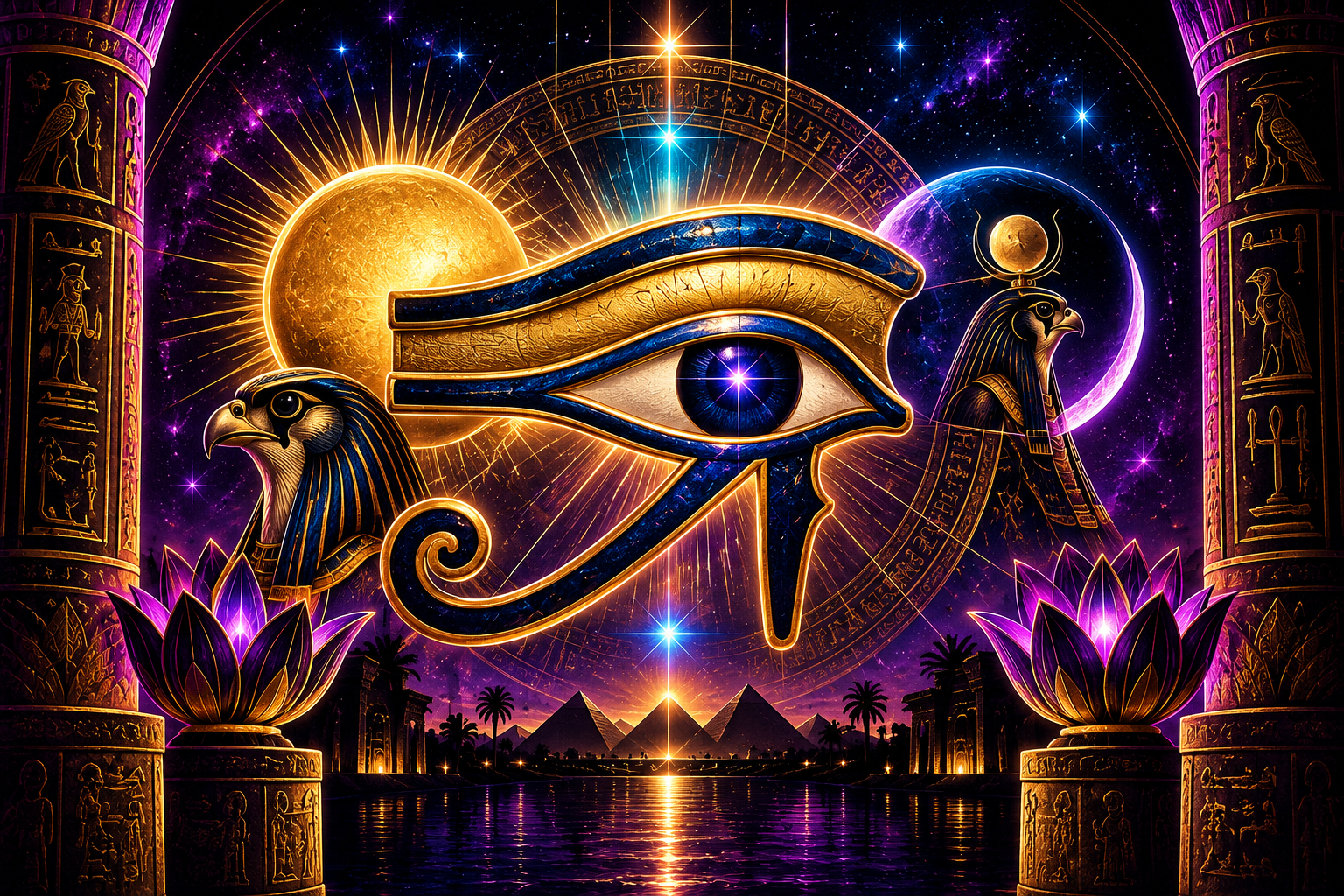
Egyptian Astrology and the Stars of Ancient Egypt
Ancient Egyptian civilization had a deep relationship with the night sky. Egyptian astronomers observed stars and celestial cycles to measure time, organize calendars, orient sacred structures, and determine the timing of religious activities.
The decans, groups of stars used by the Egyptians for timekeeping, are particularly important to the history of Egyptian astronomy. Celestial imagery also appeared on coffins, tomb ceilings, temples, and astronomical monuments.
This historical tradition should be distinguished from the popular twelve sign Egyptian zodiac described above. While the modern system draws inspiration from authentic Egyptian gods and sacred symbols, its exact personality descriptions and birth date ranges should be viewed as part of modern Egyptian inspired astrology rather than proven pharaonic astrological practice.
What Is Your Egyptian Zodiac Sign?
From the wisdom of Thoth and the protective power of Isis to the determination of Horus and the fierce strength of Sekhmet, the Egyptian zodiac offers a fascinating modern way to explore the symbolism of some of ancient Egypt's most important deities.
Find your birth date above and discover which Egyptian zodiac sign is associated with you.
For an even deeper journey into ancient Egyptian spirituality, explore Kemet Hive's guides to Egyptian gods and goddesses, ancient Egyptian astronomy, celestial symbols, mythology, temples, and the mysteries of Kemet.
Unveiling the Celestial Secrets
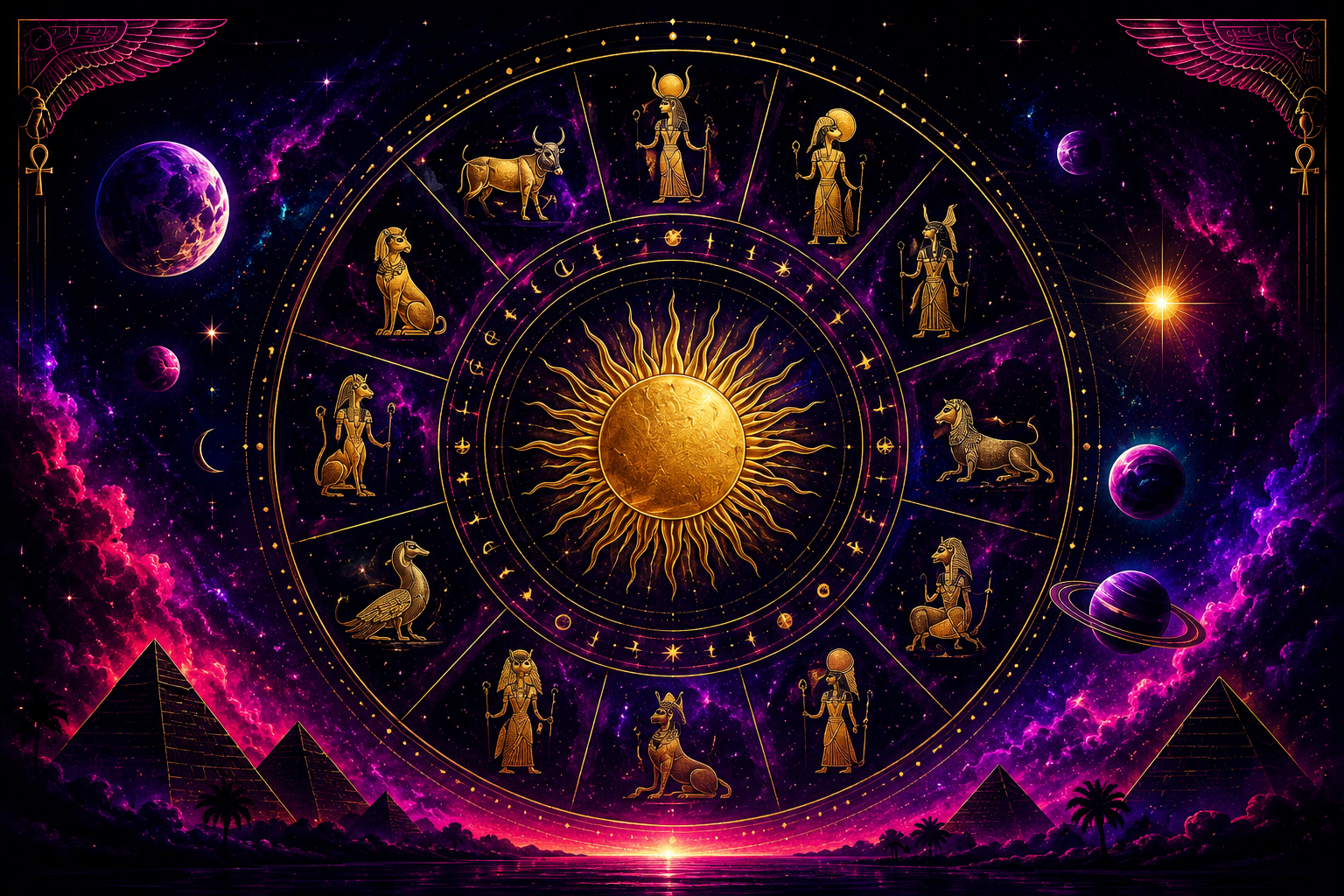
The Egyptian Zodiac
Discover the twelve signs of the Egyptian zodiac, each associated with a divine deity and offering unique insights into personality traits and life paths.
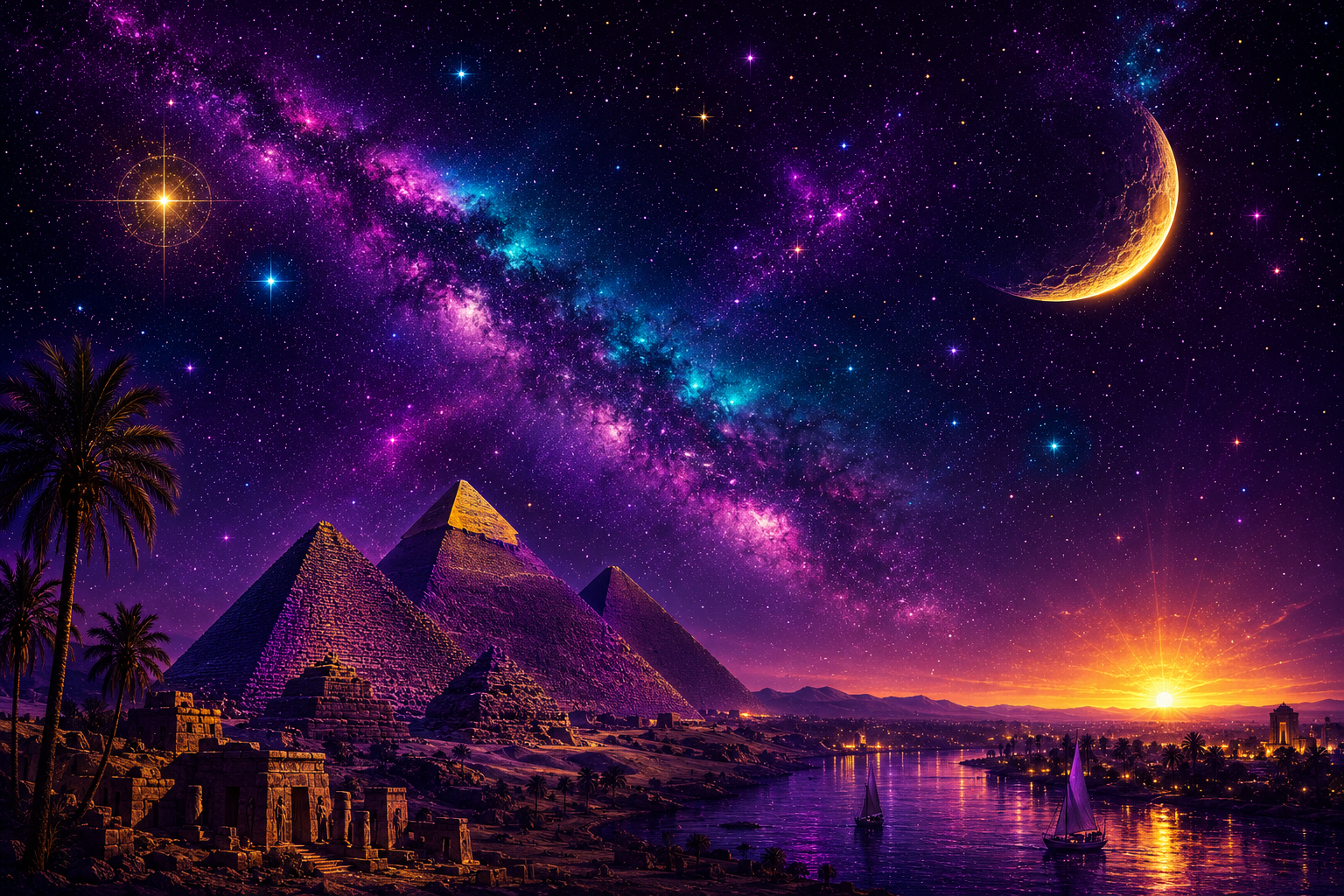
Celestial Bodies and Their Influence
Explore how the movements of the sun, moon, & stars were thoroughly observed to predict events & guide decisions in Ancient Egypt.
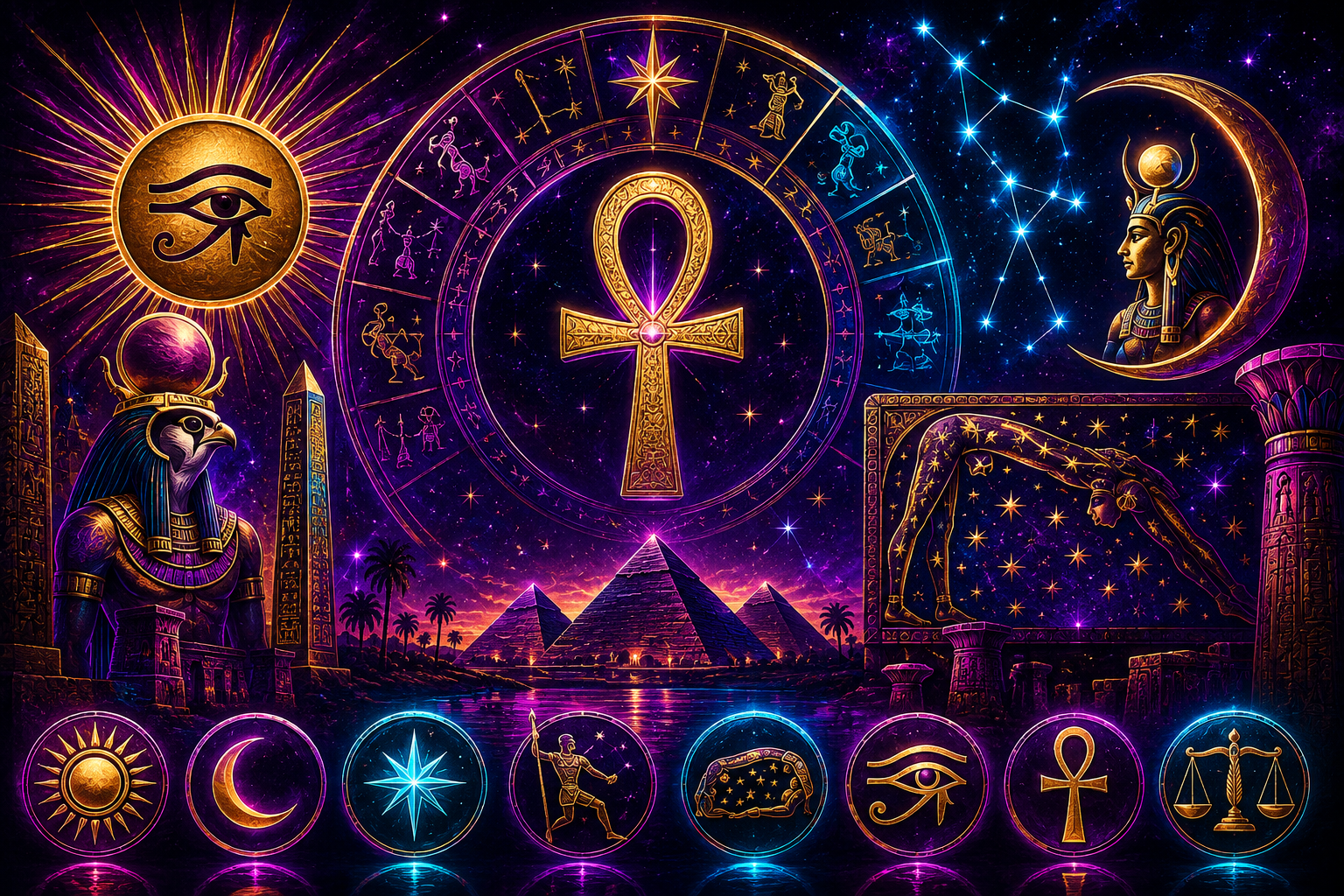
Astrological Symbols and Meanings
Understand the symbolism behind ancient astrological symbols and how they were used to interpret the will of the gods.
Explore Our Latest Insights
Ancient Egyptian Celestial Symbols and Their Powerful Meanings
Explore the powerful meanings of ancient Egyptian celestial symbols, from Ra and the Sun to Sopdet, Sah, Nut, the decans, Wedjat Eye, and ankh. Discover how ancient Egyptians connected the heavens with time, divine power, rebirth, the afterlife, and cosmic order.
The Egyptian Zodiac: Discover the 12 Signs and the Powerful Truth Behind Ancient Egyptian Astrology
Discover the 12 Egyptian zodiac signs and the fascinating truth behind Egyptian astrology. Explore the gods, meanings and modern personality associations while uncovering the authentic ancient Egyptian traditions of decans, star clocks, Sopdet, celestial observation and astronomy.
Celestial Bodies in Ancient Egypt: How the Sun, Moon, and Stars Shaped Time, Religion, and Daily Life
Explore how ancient Egyptians observed the sun, moon, Sopdet, and stars to measure time, organize calendars, guide religious observances, understand seasonal cycles, and express their powerful vision of cosmic order.