
Few rulers of ancient Egypt have a story as extraordinary as Hatshepsut. Rising from royal wife to one of Egypt’s most powerful pharaohs, Hatshepsut challenged traditional expectations of kingship and presided over a period remembered for monumental construction, international trade, and prosperity.
Rather than building her legacy primarily through military conquest, Hatshepsut invested heavily in temples, monuments, commerce, and the religious institutions that supported her authority. Her reign left an architectural mark across Egypt, most famously at her spectacular mortuary temple at Dear el Bahri.
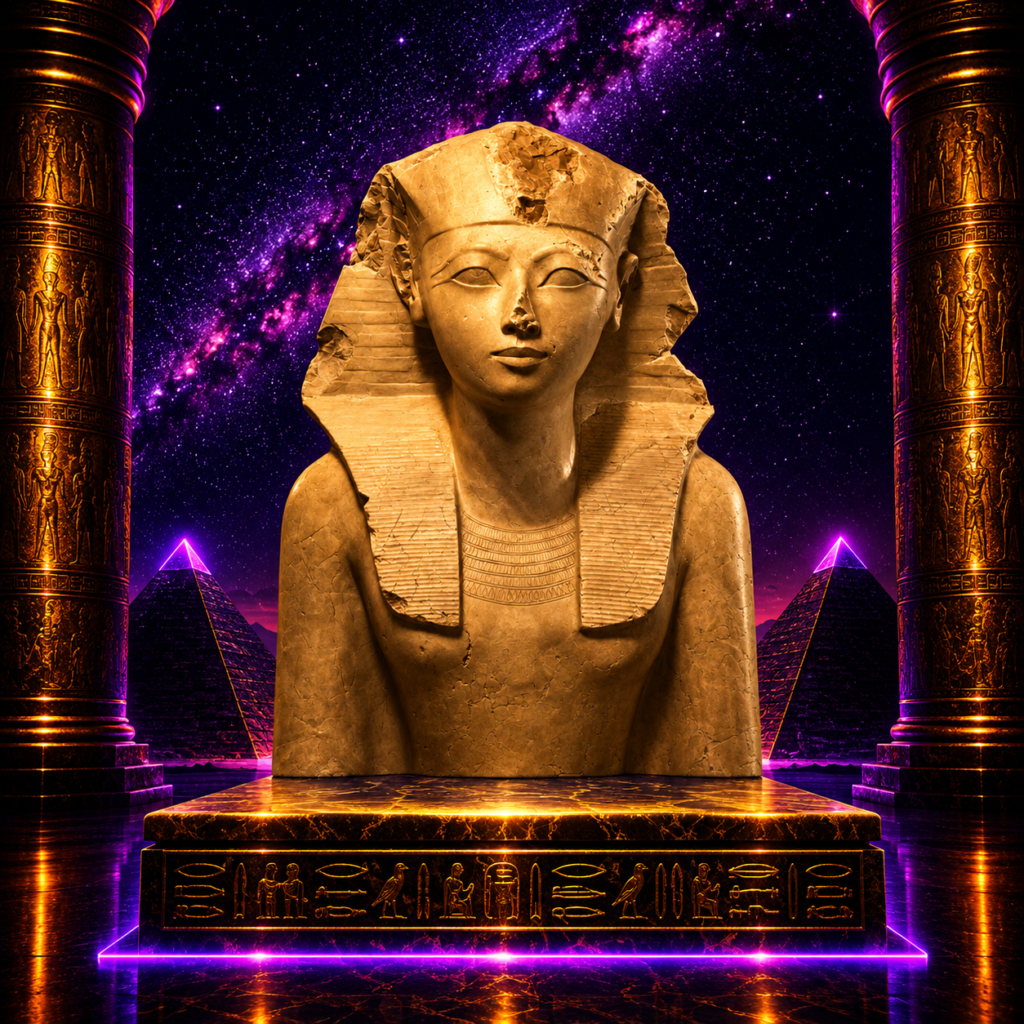
Centuries after attempts were made to remove her name and images from monuments, Hatshepsut has emerged as one of the most recognizable rulers of ancient Egypt.
Who Was Hatshepsut?
Hatshepsut was a ruler of Egypt’s 18th Dynasty during the New Kingdom. She was the daughter of Pharaoh Thutmose I and Queen Ahmose and later became the principal wife of her half brother, Thutmose II.
After Thutmose II died, the throne passed to the young Thutmose III, his son by another woman named Iset. Because Thutmose III was still a child, Hatshepsut initially acted as regent.
Her position eventually changed dramatically.
Instead of remaining only a regent, Hatshepsut adopted the full titles and symbols of Egyptian kingship and became pharaoh. She ruled alongside Thutmose III as co ruler, although Hatshepsut appears to have been the dominant royal figure during much of this period.
Her reign as king is generally dated from approximately 1479 to 1458 BCE, although exact ancient Egyptian chronologies can vary.
How Hatshepsut Became Pharaoh
Hatshepsut's rise was remarkable, but she did not simply present herself as someone rejecting Egyptian royal traditions. Instead, she carefully worked within them.
Her monuments connected her kingship with divine authority and royal ancestry. At her mortuary temple, inscriptions and reliefs presented a divine birth narrative in which the god Amun was associated with her conception and future rule.
Hatshepsut also emphasized her relationship to her father, Thutmose I, strengthening the idea that she was his legitimate royal successor.
This combination of lineage, religion, ceremony, and royal imagery helped establish her authority.
Hatshepsut ultimately assumed the traditional fivefold royal titulary of an Egyptian king. Her throne name was Maatkare, commonly translated as “Maat is the Ka of Ra.”
Her use of Maat was particularly meaningful. In ancient Egyptian thought, Maat represented truth, justice, balance, harmony, and the proper order of the cosmos. Maintaining Maat was one of the pharaoh's most important responsibilities.
Why Did Hatshepsut Sometimes Appear as a Man?
One of the most fascinating aspects of Hatshepsut's reign is the way she was represented in Egyptian art.
Early images could depict her with a more traditionally feminine appearance. As her kingship developed, however, Hatshepsut was increasingly portrayed using the established visual language of Egyptian pharaohs.
Some statues show her with the nemes headdress, royal regalia, a masculine body, and the ceremonial false beard associated with kingship.
This does not necessarily mean Hatshepsut was attempting to conceal that she was female.
Egyptian royal art was highly symbolic. Pharaohs were depicted according to conventions designed to communicate divine authority, power, legitimacy, and eternal kingship rather than simply reproduce a ruler's everyday physical appearance.
Hatshepsut's changing representation can therefore be understood as part of her adoption of the traditional role of pharaoh.
Hatshepsut's Magnificent Temple at Dear el Bahri
Perhaps the greatest surviving monument associated with Hatshepsut is her mortuary temple at Dear el Bahri, near modern Luxor.
Known in ancient times as Djeser Djeseru, often translated as “Holy of Holies,” the temple was constructed against the dramatic cliffs on the western side of the Nile.
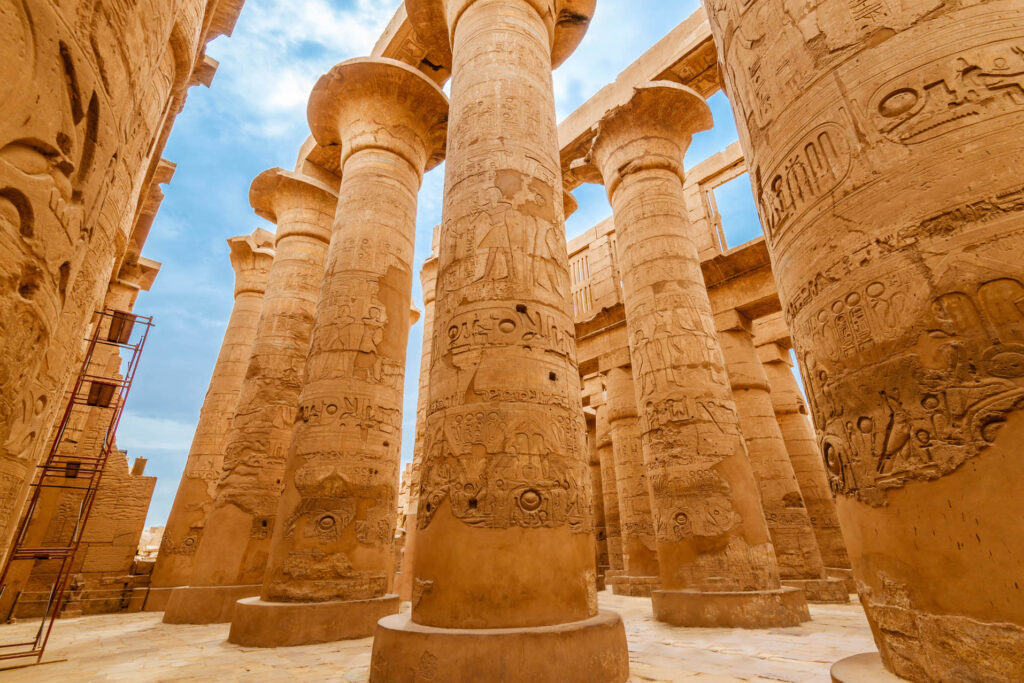
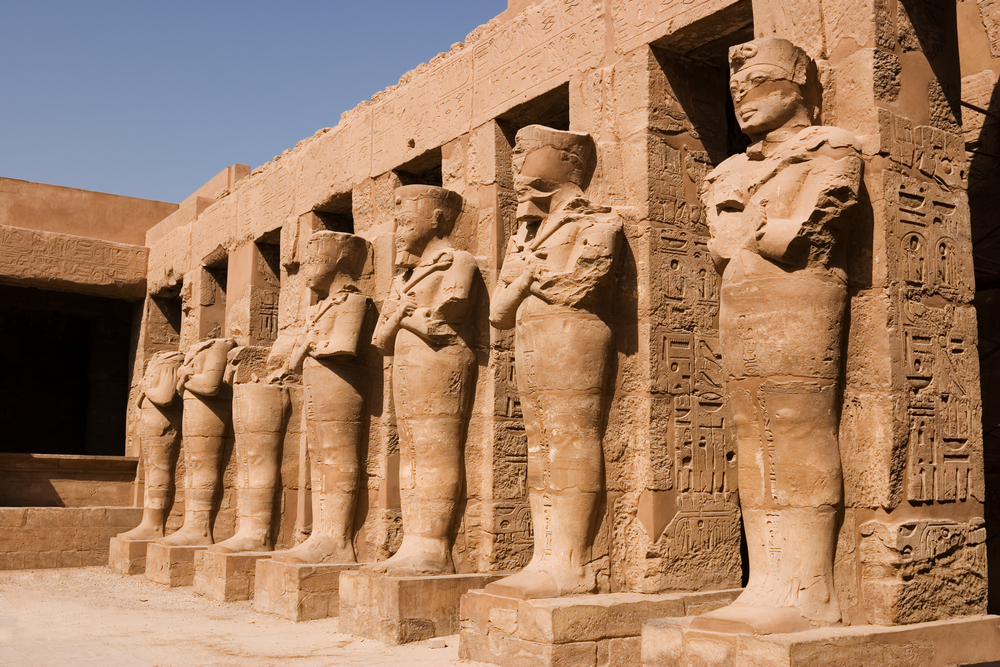
Its enormous terraces, colonnades, ramps, chapels, statues, and reliefs created one of the architectural masterpieces of the New Kingdom.
The temple was closely connected with the worship of Amun and Hatshepsut's mortuary cult. It also contained sacred spaces associated with other deities, including Hathor and Anubis.
Its walls preserve some of the most important visual records of Hatshepsut's reign.
The Famous Expedition to Punt
Among the most celebrated events depicted at Dear el Bahri is Hatshepsut's expedition to the mysterious land known to the Egyptians as Punt.
Punt had longstanding commercial connections with ancient Egypt. Scholars generally associate it with areas around the Red Sea and Horn of Africa, although its precise geographic boundaries remain debated.
Hatshepsut's reliefs depict ships traveling to Punt and returning with valuable commodities.
These included incense, myrrh, ebony, ivory, exotic animals, and other luxury goods.
Particularly remarkable are representations of living myrrh trees being transported back to Egypt.
The expedition was more than a commercial achievement. Its depiction on a royal monument communicated Hatshepsut's ability to obtain valuable resources from distant lands and maintain Egypt's international connections.
For modern historians, the Punt reliefs also provide extraordinary evidence of ancient Egyptian ships, commerce, geography, diplomacy, and interactions with neighboring African regions.
Hatshepsut's Massive Building Program
Hatshepsut was one of the New Kingdom's great builders.
Her construction projects appeared throughout Egypt, but Karnak Temple became an especially important center of her royal activity.
She commissioned enormous obelisks dedicated to Amun. One of her obelisks at Karnak remains standing today and is among the most recognizable monuments associated with her reign.
Hatshepsut proudly commemorated these projects in inscriptions.
Building temples was not simply an act of personal ambition. Egyptian kings used construction to honor the gods, demonstrate royal legitimacy, celebrate political achievements, preserve their names, and participate symbolically in maintaining cosmic order.
Hatshepsut understood the extraordinary power of monumental architecture.
Thousands of years later, her monuments are still accomplishing what Egyptian royal architecture was designed to do.
They preserve the memory of the king.
Hatshepsut and the God Amun
Religion played a central role in Hatshepsut's kingship.
The cult of Amun, particularly Amun Ra, had become increasingly influential during the New Kingdom. Hatshepsut strongly associated herself with the deity and invested heavily in his religious institutions.
Her monuments described divine support for her rule and emphasized her special relationship with Amun.
This connection helped reinforce her legitimacy.
The relationship between Egyptian religion and political authority was deeply intertwined. Pharaoh was not simply a political leader in the modern sense. Egyptian kingship carried sacred responsibilities involving the gods, temples, offerings, Maat, and the preservation of cosmic order.
Hatshepsut presented herself as fully capable of performing these responsibilities.
Hatshepsut and Thutmose III
Hatshepsut's relationship with Thutmose III is sometimes portrayed as a dramatic struggle for the throne, but the surviving evidence presents a more complicated picture.
Thutmose III remained king during Hatshepsut's reign and appeared with her on monuments. He was not simply removed from royal life.
After Hatshepsut's death, Thutmose III became the sole ruler and eventually developed a reputation as one of ancient Egypt's most successful military pharaohs.
Years later, however, something unusual happened.
Images and names of Hatshepsut began to disappear.
Why Was Hatshepsut Erased From History?
One of the greatest mysteries surrounding Hatshepsut concerns the destruction of her memory.
Her names were removed from certain monuments. Statues were damaged, altered, buried, or destroyed. Images of Hatshepsut were chiseled away in selected locations.
For many years, this destruction encouraged a dramatic interpretation: Thutmose III hated his stepmother and sought revenge after finally gaining control.
Modern scholarship has made that explanation considerably less certain.
Importantly, much of the campaign against Hatshepsut appears to have occurred years after her death, rather than immediately afterward.
This delayed timing has encouraged historians to consider political and dynastic explanations.
One possibility is that removing Hatshepsut from the official sequence of kings helped reinforce a conventional male line of succession, particularly as Thutmose III prepared the future succession of his son Amenhotep II.
The exact motivations remain debated.
What is clear is that the destruction was selective and significant enough to obscure Hatshepsut's unusual kingship for centuries.
Rediscovering the Female Pharaoh
The attempt to diminish Hatshepsut's royal identity ultimately failed.
Archaeologists and Egyptologists gradually reconstructed her history through surviving inscriptions, statues, temples, reliefs, and archaeological discoveries.
Her monuments revealed something extraordinary.
The apparently male king represented on some monuments and the royal woman Hatshepsut were the same ruler.
Modern archaeological work at Dear el Bahri and other locations has continued to reveal information about her reign, officials, religious program, architecture, and royal identity.
Today, Hatshepsut has reclaimed her place among the most important rulers of ancient Egypt.
The Mystery of Hatshepsut's Mummy
The identification of Hatshepsut's mummy has generated considerable attention and debate.
In 2007, Egyptian authorities announced that a female mummy from tomb KV60 in the Valley of the Kings had been identified as Hatshepsut. The proposed identification involved archaeological evidence and comparisons involving a tooth reportedly associated with Hatshepsut.
The identification became widely publicized, but scholars have continued to discuss the strength of the evidence.
Because ancient remains present difficult archaeological and scientific challenges, conclusions surrounding royal mummy identification should be treated carefully when evidence remains disputed.
The continuing investigation illustrates how archaeology can transform our understanding of individuals who lived more than three thousand years ago.
What Did Hatshepsut Accomplish?
Hatshepsut's reign demonstrates that political power in ancient Egypt could sometimes operate beyond the expectations we might assume existed in the ancient world.
Her accomplishments included extensive monumental construction, temple restoration and expansion, international commerce, religious patronage, and the strengthening of royal institutions.
She also created one of the most distinctive presentations of kingship in Egyptian history.
Rather than abandoning the institution because its imagery had traditionally been masculine, Hatshepsut adapted herself to its symbols while simultaneously preserving references to her identity as a woman.
That makes her reign especially valuable for understanding how ancient Egyptians conceptualized gender, political authority, religion, and kingship.
Hatshepsut's Powerful Legacy
Hatshepsut ruled more than three thousand years ago, yet her story remains remarkably compelling.
She inherited a political situation in which she was expected to serve as regent for a young king. She ultimately transformed that position into full pharaonic authority.
She constructed monumental temples.
She raised enormous obelisks.
She celebrated expeditions to distant lands.
She presented herself as chosen by the gods.
And when later generations attempted to remove portions of her royal identity from Egypt's monuments, enough evidence survived for history to reconstruct her remarkable reign.
Hatshepsut's story is therefore not simply the story of a female ruler.
It is the story of power, legitimacy, transformation, memory, and survival in one of the world's most influential ancient civilizations.
Her monuments still rise above the Egyptian landscape, reminding the world that even an attempted erasure could not completely silence one of ancient Egypt's most extraordinary pharaohs.
Frequently Asked Questions About Hatshepsut
Was Hatshepsut really a pharaoh?
Yes. Hatshepsut adopted the full titles, regalia, and political and religious responsibilities associated with Egyptian kingship. She ruled as pharaoh during Egypt's 18th Dynasty.
Was Hatshepsut the first female pharaoh?
No. Women ruled Egypt before Hatshepsut. Earlier female rulers included Sobekneferu of the 12th Dynasty. Hatshepsut is significant because of the length, prosperity, monumental scale, and documentation of her reign.
Why did Hatshepsut wear a false beard?
The ceremonial beard was part of traditional Egyptian royal iconography. Hatshepsut's use of masculine royal symbols represented her status as pharaoh rather than necessarily an attempt to disguise her sex.
What is Hatshepsut most famous for?
Hatshepsut is especially famous for becoming pharaoh, her monumental building projects, her mortuary temple at Dear el Bahri, her obelisks at Karnak, and the celebrated trading expedition to Punt.
Who ruled after Hatshepsut?
Thutmose III, who had technically ruled alongside Hatshepsut, became the sole pharaoh following her death.
Why was Hatshepsut's name erased?
Parts of Hatshepsut's royal imagery and names were deliberately removed after her death. Scholars continue to debate the precise motivation, although dynastic succession and the desire to reshape the official royal lineage are important explanations.
Final Thoughts
Hatshepsut remains one of the most fascinating figures in the history of ancient Kemet.
Her reign reveals a civilization in which political authority, divine legitimacy, architecture, trade, symbolism, and remembrance were deeply interconnected.
Attempts to erase her could damage stone, remove names, and destroy statues.
They could not erase her completely.
More than three millennia later, Hatshepsut stands again among the great pharaohs of ancient Egypt, her temple beneath the cliffs of Dear el Bahri serving as one of the most spectacular surviving monuments to her reign.