
Long before the Great Pyramid of Giza dominated Egypt's horizon, another extraordinary monument transformed the landscape at Saqqara. Rising in six massive stages above the desert was the Step Pyramid of Djoser, one of the earliest monumental stone structures in ancient Egypt and a revolutionary achievement in the history of architecture.
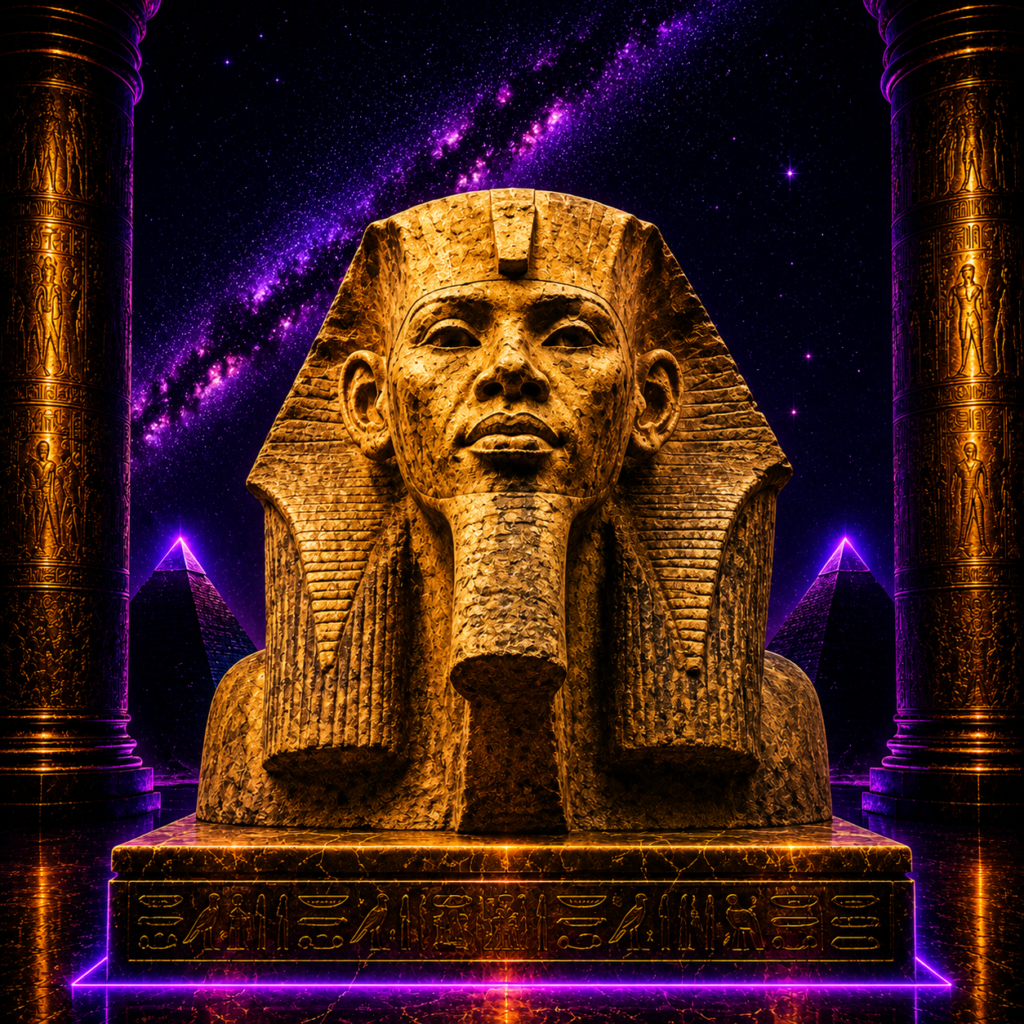
At the center of this transformation stood Pharaoh Djoser, a ruler of Egypt's Third Dynasty whose reign helped usher in a new era of royal monument building.
Djoser's legacy extends far beyond his pyramid. His reign is associated with the growing power of Egypt's kingship, increasingly sophisticated administration, religious traditions, monumental architecture, and the remarkable achievements of his famous official Imhotep.
Thousands of years later, Djoser's Step Pyramid still rises over Saqqara—a monument to a king whose vision helped reshape ancient Egypt.
Who Was Pharaoh Djoser?
Djoser was an ancient Egyptian pharaoh of the Third Dynasty, ruling during the early Old Kingdom in the third millennium BCE. The exact dates and length of his reign remain subjects of scholarly debate, as chronological evidence from this early period is incomplete.
Ancient inscriptions indicate that the king commonly known today as Djoser used the Horus name Netjerikhet, meaning approximately "Divine of Body" or "Divine of the Corporation." The name Djoser became strongly associated with him in later Egyptian tradition.
His reign occupies an important position in Egyptian history because it coincided with a dramatic expansion in the scale and sophistication of royal construction.
Djoser inherited a civilization that had already developed writing, centralized government, royal burial traditions, religious institutions, skilled craftsmanship, and impressive architecture.
But under Djoser, these traditions reached a new monumental level.
Djoser and the Rise of Egypt's Old Kingdom
Djoser is traditionally regarded as one of the earliest rulers of Egypt's Third Dynasty, a period frequently associated with the beginning of the Old Kingdom.
By this time, Egypt had already been politically unified for centuries. The pharaoh stood at the center of a complex state supported by administrators, priests, craftsmen, agricultural workers, and regional officials.
Kingship was deeply intertwined with religion.
The pharaoh was not simply a political ruler. Egyptian ideology placed the king within the sacred order of the cosmos, connecting royal authority with the gods and with Ma'at, the principle of truth, balance, justice, and cosmic order.
Djoser's enormous funerary complex at Saqqara reflects this relationship between kingship, religion, death, and eternity.
It was not simply a tomb.
It was an architectural expression of divine royal power.
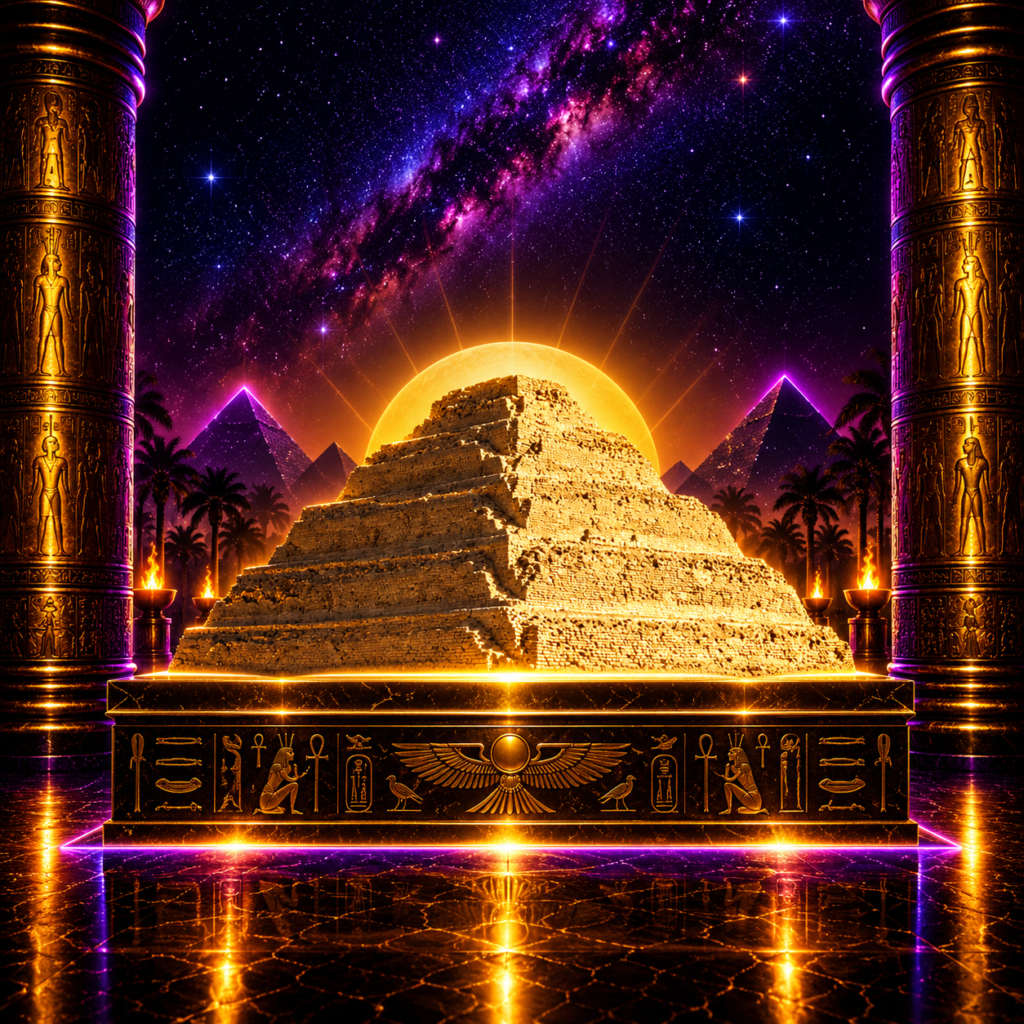
The Step Pyramid of Djoser: A Revolution in Architecture
The achievement most closely associated with Djoser is his magnificent Step Pyramid at Saqqara.
Before Djoser's reign, elite Egyptian burials frequently involved rectangular structures known today as mastabas. These structures generally had flat roofs and sloping sides.
Djoser's monument took the concept in an extraordinary new direction.
Instead of constructing only a traditional mastaba, the builders progressively expanded the structure until it developed into a monumental pyramid consisting of six ascending steps.
The finished Step Pyramid rose approximately 60 meters (197 feet) above the desert.
Nothing quite like it had previously appeared on this scale in Egypt.
Its towering form fundamentally changed the possibilities of Egyptian royal architecture.
Imhotep: The Brilliant Mind Behind Djoser's Monument
No discussion of Pharaoh Djoser is complete without Imhotep.
Imhotep was one of the most famous intellectual figures to emerge from ancient Egypt. During Djoser's reign, he held important positions within the royal administration and is closely associated with the construction of Djoser's funerary complex.
An inscription on a statue base connected with Djoser's complex identifies Imhotep with prestigious titles, demonstrating his high status within the royal court.
Later generations of Egyptians remembered Imhotep as a figure of extraordinary wisdom.
Over the centuries, his reputation grew so greatly that he was eventually deified and worshipped as a divine figure associated particularly with wisdom and healing.
Modern popular culture often calls Imhotep the world's "first architect." That description is useful as shorthand but should be treated carefully. Earlier builders obviously existed, and the surviving evidence does not allow every element of the Step Pyramid complex to be attributed to one individual.
Nevertheless, Imhotep's historical association with Djoser's monumental project makes him one of the earliest architects or master builders known to us by name.
Together, Djoser and Imhotep became linked to one of the great turning points in architectural history.
Inside Djoser's Pyramid Complex
The Step Pyramid was only one part of a much larger sacred landscape.
Djoser's funerary complex covered approximately 15 hectares (37 acres) and was enclosed by an enormous limestone wall.
Within the enclosure were courtyards, shrines, ceremonial buildings, temples, passageways, and structures connected with royal rituals.
One of its most fascinating features is that some of the stone architecture appears to imitate forms traditionally constructed from organic materials such as wood and reeds.
Stone columns, doorways, and architectural details preserved familiar Egyptian building traditions in a far more permanent material.
It was as though elements of the living world had been recreated in stone for eternity.
Beneath the Step Pyramid
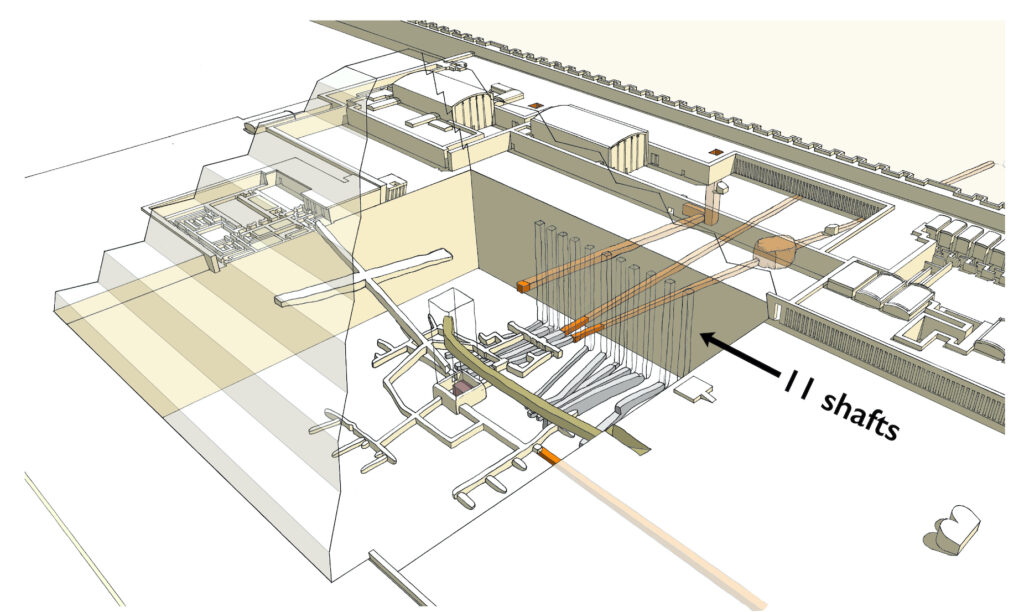
While the pyramid towers above the desert, an equally fascinating architectural world exists underground.
Beneath Djoser's monument lies an extensive network of shafts, chambers, corridors, and galleries.
The burial chamber was constructed deep beneath the pyramid.
Parts of the subterranean complex were decorated with thousands of beautiful blue-green faience tiles, apparently designed to imitate reed-mat panels associated with royal architecture.
The brilliant blue-green color carried powerful associations in Egyptian culture, including ideas connected with water, vegetation, renewal, and regeneration.
These underground spaces reveal an essential aspect of ancient Egyptian royal burial traditions.
The tomb was not merely a place for a body.
It was part of a sacred environment created for transformation, rebirth, and eternal existence.
What Did Pharaoh Djoser Accomplish?
Djoser's greatest surviving accomplishment is unquestionably his monumental complex at Saqqara, but his importance extends beyond architecture.
His reign demonstrates the organizational power that Egypt's central government had developed by the Third Dynasty.
A project on the scale of the Step Pyramid required extraordinary coordination.
Stone had to be quarried, transported, shaped, and positioned. Skilled craftsmen, architects, administrators, laborers, priests, and officials had to work within an organized system.
Food, equipment, housing, and other resources also had to support those involved in the project.
The Step Pyramid therefore represents not only architectural innovation but also the administrative capabilities of the ancient Egyptian state.
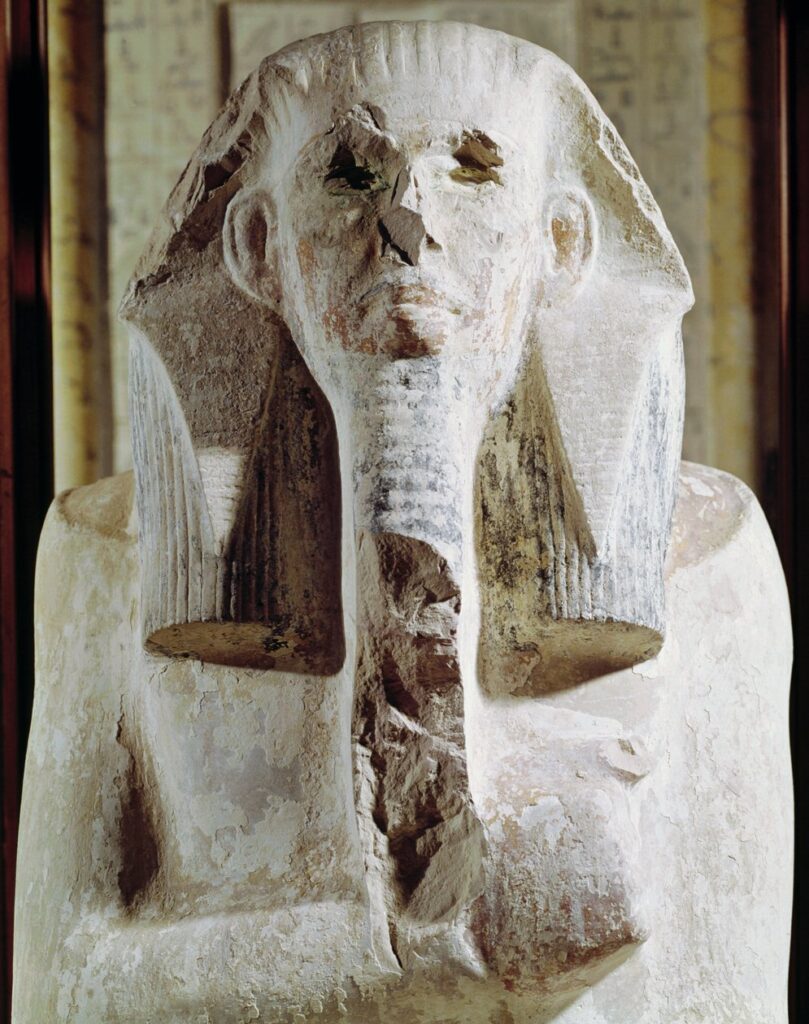
Did Djoser Rule During a Seven-Year Famine?
One of the most famous stories associated with Djoser involves a devastating seven-year famine.
The story appears on the so-called Famine Stela, an inscription located on Sehel Island near Aswan.
According to the text, Egypt suffered seven years of poor Nile floods and famine during Djoser's reign. The king sought guidance about the source of the Nile and ultimately honored the ram-headed deity Khnum, whose cult center was associated with the First Cataract region.
It is a fascinating story but there is an important historical problem.
The Famine Stela was created more than two thousand years after Djoser's lifetime, probably during the Ptolemaic period.
For that reason, historians cannot treat it as a contemporary record proving that a seven-year famine actually occurred during Djoser's reign.
Instead, the inscription demonstrates something equally fascinating:
Djoser's name and reputation remained powerful in Egyptian cultural memory thousands of years after his death.
Djoser and the God Khnum
The Famine Stela also connects Djoser with Khnum, one of ancient Egypt's important creator deities.
Khnum was particularly associated with the Nile's First Cataract region and was worshipped prominently at Elephantine. Egyptian religious traditions portrayed him as a creator who fashioned life, often represented as a ram-headed deity working at a potter's wheel.
Although the Famine Stela cannot be read straightforwardly as a historical account of Djoser's reign, its use of Djoser reveals how later Egyptians placed famous ancient kings within sacred narratives involving the gods, the Nile, and Egypt's prosperity.
Was Djoser Buried in the Step Pyramid?
The Step Pyramid complex was clearly constructed as Djoser's royal funerary monument, and its subterranean chambers included a burial chamber.
However, Djoser's original burial has not survived intact.
Like many ancient Egyptian royal tombs, the monument experienced disturbance and looting over the enormous span of time separating Djoser's reign from the modern era.
As a result, many questions remain about exactly what happened to the king's remains and original burial equipment.
The architecture itself, however, leaves little doubt about the monument's funerary purpose.
How Djoser Changed Pyramid Building Forever
Djoser's Step Pyramid occupies a crucial position in the evolution of Egyptian pyramid architecture.
Later Third Dynasty and Fourth Dynasty rulers continued experimenting with enormous stone monuments.
Eventually, Egyptian builders developed the smooth-sided true pyramid.
During the Fourth Dynasty, Sneferu oversaw some of the most important stages in this architectural evolution, including the Bent Pyramid and Red Pyramid at Dahshur.
Then came the gigantic pyramid complexes associated with Khufu, Khafre, and Menkaure at Giza.
The Great Pyramid of Khufu would ultimately reach approximately 146.6 meters (481 feet) in its original height.
But the architectural revolution visible at Giza did not appear suddenly.
Djoser's Step Pyramid represents one of its most important foundations.
Before the Great Pyramid, there was Djoser.
Djoser's Legacy in Ancient Egypt
Djoser's legacy can be measured in stone.
His pyramid transformed the Egyptian royal tomb into something dramatically larger and more visually commanding than its predecessors.
But the importance of his reign is deeper than a single monument.
The Step Pyramid complex represents the convergence of royal authority, religion, engineering, administration, craftsmanship, mathematics, and architectural experimentation.
It demonstrates what Egypt had become capable of achieving by the early Old Kingdom.
Djoser's monument also helped establish a powerful architectural language that subsequent generations would develop on an even greater scale.
The pyramid became one of the most recognizable symbols of ancient Egyptian civilization.
Djoser stood near the beginning of that monumental tradition.
Why Pharaoh Djoser Still Matters
More than four thousand years after his reign, Djoser's name survives because his monument marked a profound moment in the history of ancient Egypt.
His builders transformed enormous quantities of limestone into an artificial mountain rising above the sacred desert.
His funerary complex brought together architecture, ritual, kingship, and ideas about eternal life on an unprecedented scale.
And alongside Djoser stood Imhotep, an official whose reputation would eventually transcend history and enter the realm of Egyptian divinity.
Together, their names became inseparable from one of ancient Egypt's greatest architectural achievements.
When people think of Egypt today, they often imagine the pyramids of Giza first.
But the road to Giza leads back to Saqqara.
There stands Djoser's Step Pyramid, the monument of a pharaoh whose reign helped change Egyptian architecture forever.