Few rulers of ancient Egypt capture the world’s imagination quite like King Tutankhamun, better known as King Tut. His reign was relatively short, and he died while still a teenager, yet thousands of years later, Tutankhamun has become one of the most recognizable pharaohs in history.
His fame comes not from great military conquests or decades of rule, but from an extraordinary archaeological discovery. In 1922, archaeologist Howard Carter uncovered Tutankhamun’s remarkably well preserved tomb in the Valley of the Kings. Inside were thousands of objects, including royal furniture, jewelry, chariots, weapons, ritual objects, and the magnificent golden funerary mask that became an international symbol of ancient Egypt.
But behind the gold was a young ruler living during one of the most complicated periods in Egyptian history.
Who was King Tutankhamun? Why did he become pharaoh at such a young age? What happened during his reign? And what do we actually know about his mysterious death?
Who Was King Tutankhamun?
Tutankhamun was a pharaoh of ancient Egypt's 18th Dynasty, ruling during the New Kingdom in the 14th century BCE. His reign is generally dated to approximately 1332 to 1323 BCE, although exact dates vary among scholars.
Tutankhamun came to the throne when he was still a child, probably around eight or nine years old.
His original name was Tutankhaten, which is commonly interpreted as "Living Image of Aten." The name reflected the religious environment created by Pharaoh Akhenaten, who had elevated the solar deity Aten and dramatically changed Egypt's traditional religious system.
Tutankhamun would eventually abandon the name Tutankhaten and become Tutankhamun, reflecting the renewed importance of Amun, one of Egypt's most important deities.
This change represented something much larger than the personal name of a young king.
It symbolized Egypt's return toward its traditional religious order.
Was King Tut the Son of Akhenaten?
Tutankhamun is widely understood to have been closely connected to Akhenaten, the controversial pharaoh associated with the religious transformation known as the Amarna Period.
Genetic research conducted on royal mummies has supported the conclusion that the mummy identified as Akhenaten's probable remains was Tutankhamun's father. The identity of Tutankhamun's mother remains more complicated. DNA research identified a mummy from tomb KV35, often called the Younger Lady, as Tutankhamun's mother and a close relative of his father.
The precise identities and relationships within the Amarna royal family continue to generate scholarly discussion.
What is clear is that Tutankhamun inherited a kingdom emerging from enormous religious and political upheaval.
Akhenaten and the Religious Revolution Before King Tut
To understand King Tutankhamun, it is important to understand what happened before his reign.
Akhenaten radically transformed Egyptian religion by promoting the worship of the Aten, represented by the sun disk whose rays extended toward the royal family.
He also established a new royal capital called Akhetaten, located at modern day Amarna.
The religious transformation disrupted institutions that had played major roles in Egyptian society for generations, particularly those associated with Amun.
After Akhenaten's death, Egypt gradually moved away from these policies.
The young Tutankhamun became an important figure in that restoration.
Why Did Tutankhaten Become Tutankhamun?
One of the most important developments of Tutankhamun's reign was the restoration of Egypt's traditional religious practices.
His name changed from Tutankhaten to Tutankhamun, while his queen, Ankhesenpaaten, became known as Ankhesenamun.
The change reflected a renewed connection with Amun.
Temples and religious institutions associated with Egypt's traditional deities were restored, and the royal court moved away from Akhetaten.
An important surviving text known as the Restoration Stela describes the poor condition of temples and sacred places before presenting Tutankhamun as the king responsible for restoring religious order.
Because Tutankhamun was extremely young, powerful officials almost certainly played major roles in government.
Among the most important were Ay, who would later become pharaoh, and the military commander Horemheb, who would also eventually rule Egypt.
King Tut and Queen Ankhesenamun
Tutankhamun was married to Ankhesenamun, a royal woman associated with the Amarna family and generally identified as a daughter of Akhenaten and Nefertiti.
Their marriage would have reinforced Tutankhamun's connection to the royal dynasty.
Some of the most fascinating objects discovered in Tutankhamun's tomb portray the royal couple in unusually intimate scenes.
One famous image on Tutankhamun's golden throne shows Ankhesenamun standing before the seated king while rays from the Aten extend above them.
These images offer a rare glimpse of royal life beyond formal images of kingship.
Evidence also indicates that the couple experienced tragedy.
Two small mummified fetuses were discovered inside Tutankhamun's tomb. Genetic and archaeological studies have supported their identification as daughters of Tutankhamun, although many details surrounding the pregnancies remain uncertain.
Tutankhamun appears to have died without a surviving heir.
That would have major consequences for Egypt's royal succession.
What Did King Tut Look Like?
Tutankhamun's appearance has fascinated researchers for decades.
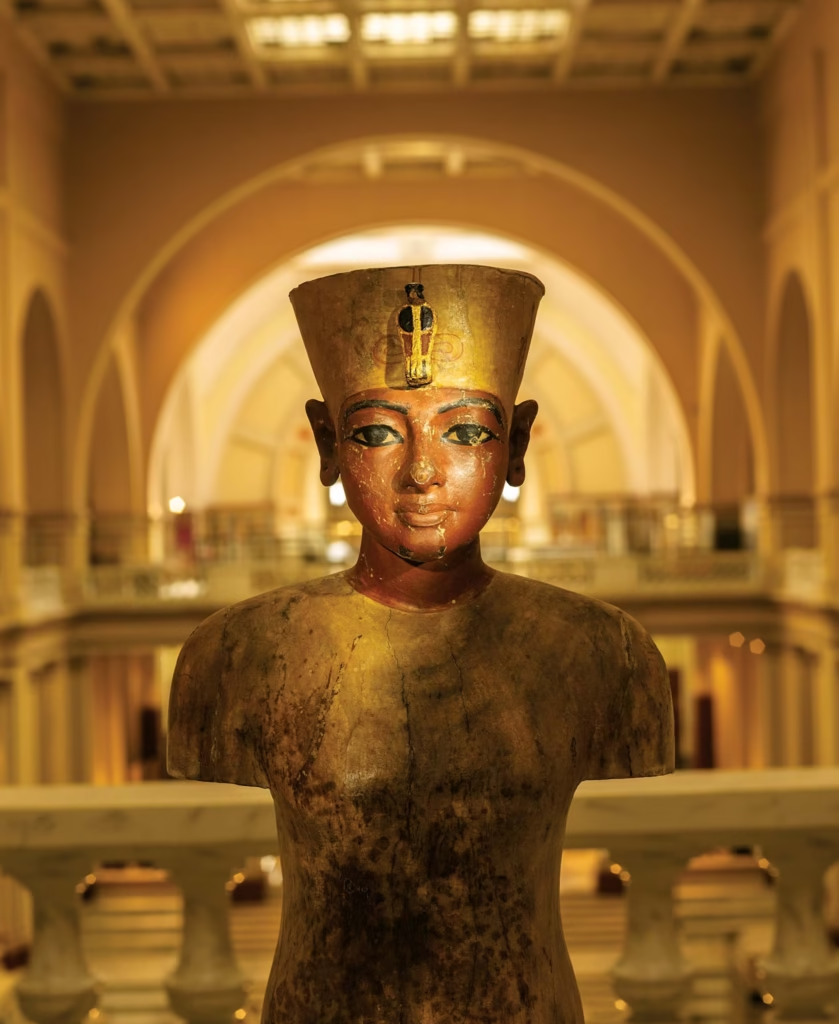
Ancient Egyptian royal art was highly symbolic and should not automatically be treated as photographic portraiture. However, his mummy, statues, coffins, and other representations provide researchers with evidence for studying the young king.
Modern CT scans and genetic investigations have also contributed information about his physical condition.
Researchers have identified several health concerns associated with Tutankhamun, including a clubfoot and evidence of other physical abnormalities.
Numerous walking sticks were discovered inside his tomb. Some showed signs consistent with actual use, suggesting they may not have been purely ceremonial.
This creates a very different image of Tutankhamun from the flawless golden king represented by his famous funerary mask.
Behind the royal imagery was a real young person whose health may have been fragile.
How Did King Tut Die?
The death of King Tutankhamun remains one of the greatest mysteries associated with ancient Egypt.
He died at approximately 18 or 19 years old.
For decades, theories suggested that Tutankhamun may have been murdered. Damage visible on his skull helped fuel speculation that he had suffered a fatal blow to the head.
Later examinations, however, weakened that theory.
Modern CT scans and other studies have identified additional medical evidence, including a serious injury to his leg.
DNA based research also reported evidence associated with Plasmodium falciparum, the parasite responsible for severe malaria.
One influential interpretation suggested that malaria combined with other health complications may have contributed to his death.
However, scientists have not reached universal agreement on a single definitive cause.
Murder, accident, infection, genetic vulnerabilities, and combinations of medical complications have all appeared in discussions of Tutankhamun's death.
The most responsible conclusion is simple:
We still do not know exactly what killed King Tutankhamun.
And that uncertainty remains one of the reasons his story continues to fascinate the world.
The Death of a Young Pharaoh
Tutankhamun's death created an urgent political problem.
The young pharaoh apparently had no surviving children to inherit the throne.
Following his death, Ay became pharaoh. Horemheb later succeeded Ay and eventually worked to remove or overwrite parts of the legacy associated with the Amarna rulers.
Ironically, Tutankhamun's relatively minor historical position may have helped preserve his memory in an unexpected way.
His name disappeared from many later royal records.
But his tomb remained hidden beneath the sands and debris of the Valley of the Kings.
For more than 3,000 years, its treasures waited in darkness.
Howard Carter Discovers King Tut's Tomb
Everything changed in 1922.
British archaeologist Howard Carter, whose excavations were financed by Lord Carnarvon, had spent years searching the Valley of the Kings for the missing tomb of Tutankhamun.
On November 4, 1922, Carter's team discovered a step cut into the ground.
More steps were uncovered.
Then came a sealed doorway.
The discovery ultimately led Carter to KV62, the tomb of Tutankhamun.
When Carter made a small opening and looked into the tomb by candlelight, he saw extraordinary objects filling the chamber.
The discovery would become one of the most famous moments in the history of archaeology.
What Was Found Inside King Tut's Tomb?
Tutankhamun's tomb contained more than 5,000 objects.
The collection provided archaeologists with an extraordinary look into royal burial practices, craftsmanship, religion, technology, clothing, warfare, transportation, and daily life during Egypt's New Kingdom.
Among the objects discovered were:
- Golden shrines
- Royal chariots
- Ceremonial beds
- Thrones
- Jewelry
- Sandals
- Clothing
- Weapons
- Walking sticks
- Food and wine containers
- Statues
- Ritual objects
- Canopic equipment
- Coffins
- Personal possessions
These objects were not simply treasure.
They were part of a carefully constructed funerary world designed to prepare the deceased king for existence beyond death.
King Tut's Golden Mask
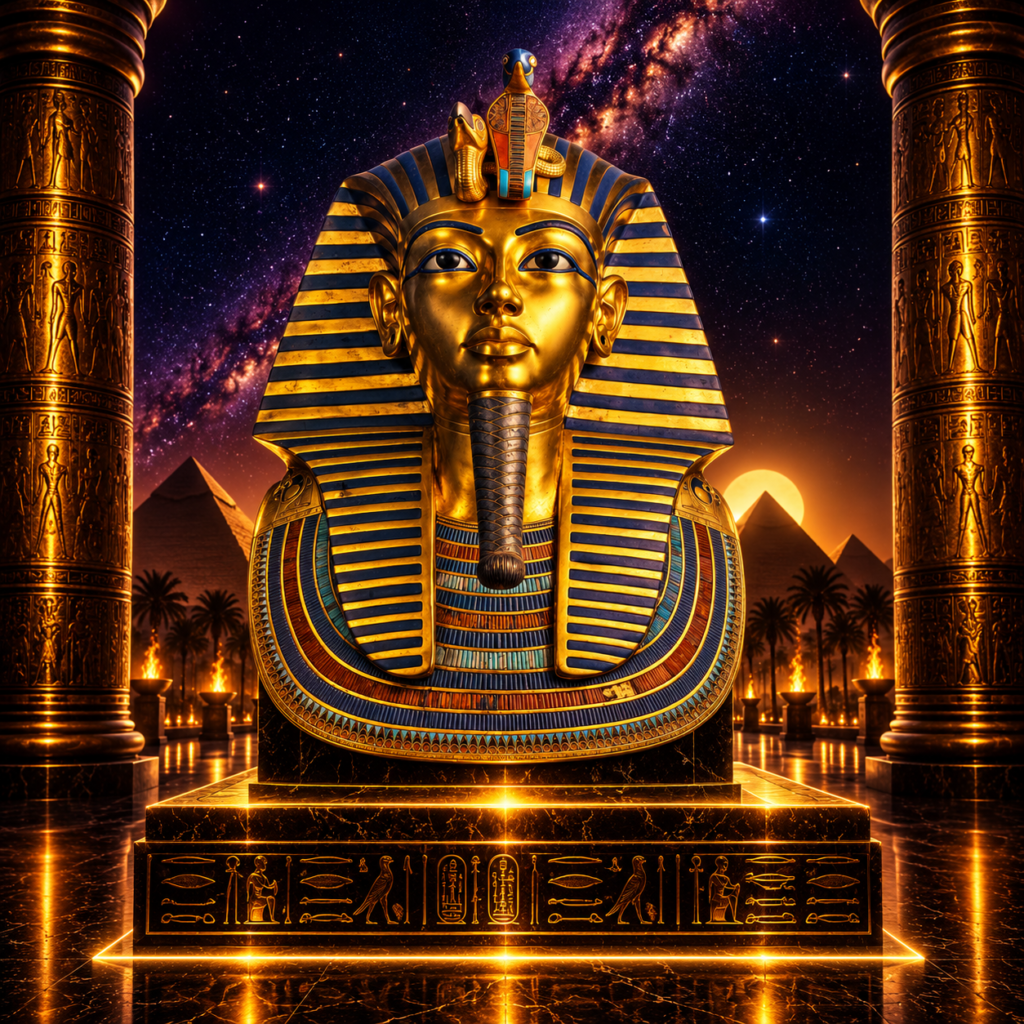
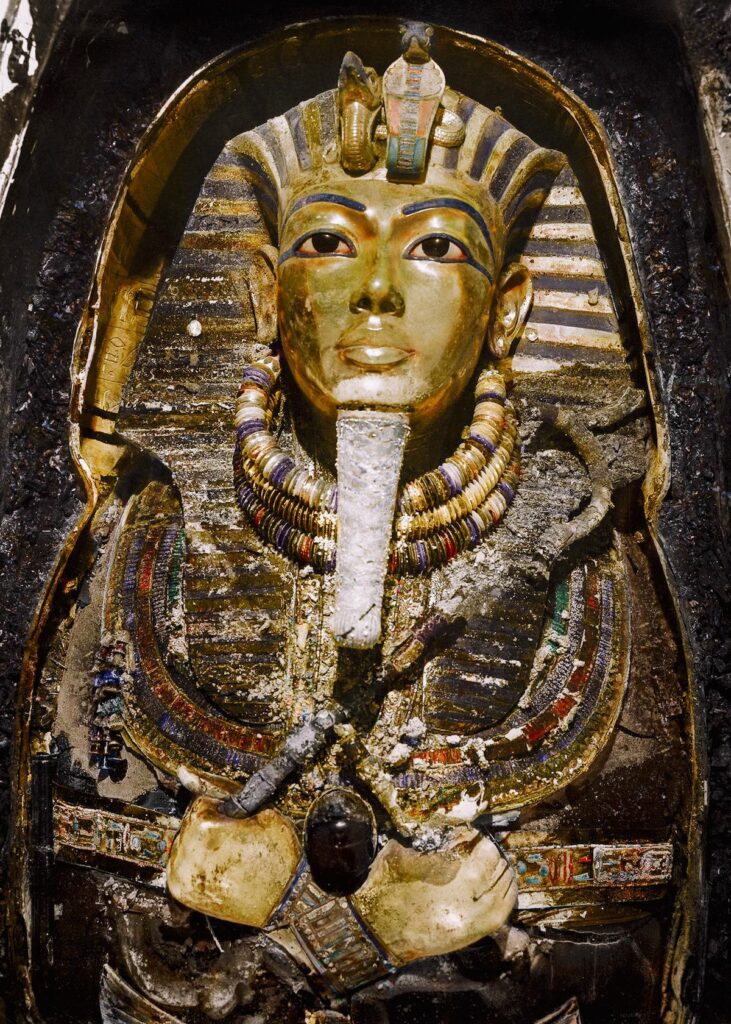
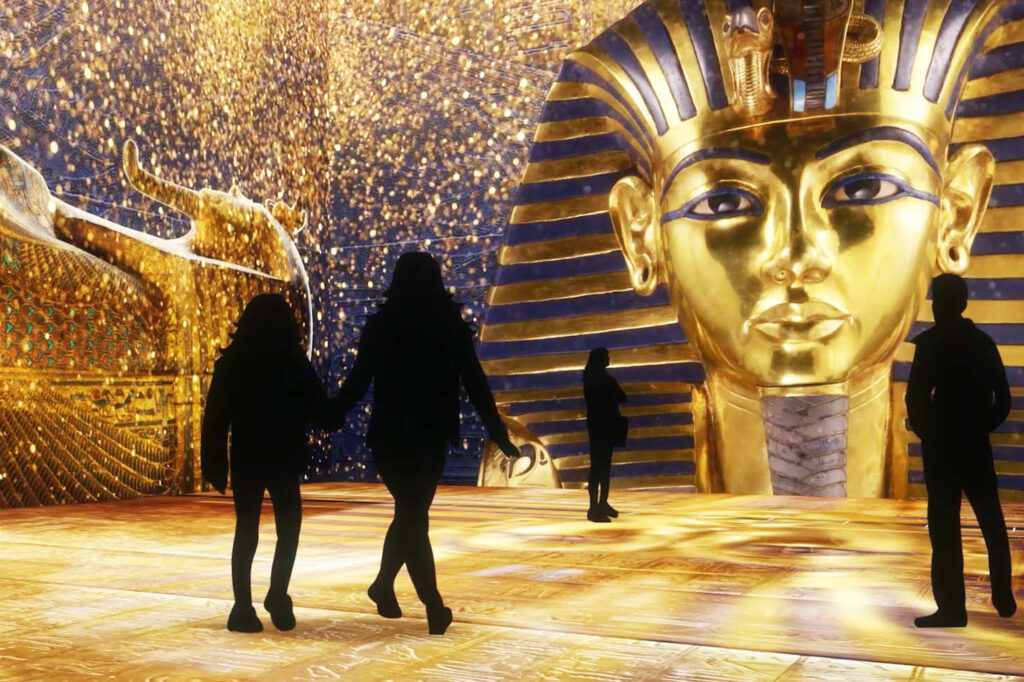
Perhaps no object from ancient Egypt is more instantly recognizable than the golden funerary mask of Tutankhamun.
The mask covered the head and shoulders of the mummified pharaoh.
Made primarily from gold and decorated with colored materials, the mask presents Tutankhamun in an idealized royal form.
The striped nemes headdress frames his face, while the cobra and vulture positioned on his forehead represent royal authority and protection connected with Upper and Lower Egypt.
The mask was more than an extraordinary work of art.
Within Egyptian funerary belief, preserving and identifying the deceased was connected to the transformation necessary for existence in the afterlife.
Today, the mask has become one of the most famous symbols of ancient Egyptian civilization.
Why Was King Tut's Tomb So Important?
Tutankhamun was not among ancient Egypt's longest reigning or most militarily powerful kings.
Yet his tomb became one of archaeology's most important discoveries.
Why?
Many royal tombs in the Valley of the Kings had been robbed in antiquity. Tutankhamun's tomb had also been entered in ancient times, but much of its extraordinary collection remained inside when Carter discovered it.
This gave archaeologists an unprecedented opportunity to study the burial equipment associated with a New Kingdom pharaoh.
The tomb helped transform modern understanding of Egyptian royal burial traditions.
It also transformed Tutankhamun into a global cultural phenomenon.
Was King Tut's Tomb Small?
Compared with several other royal tombs in the Valley of the Kings, Tutankhamun's tomb is relatively modest.
This has encouraged theories that his unexpected death may have occurred before a larger royal tomb could be completed.
Some researchers have proposed that KV62 may originally have been intended for someone else and was adapted for Tutankhamun after his sudden death.
The tomb consists of several principal spaces, including the antechamber, annex, burial chamber, and treasury.
Despite its relatively small size, the amount of material placed inside was astonishing.
Objects were packed tightly into its chambers, creating an archaeological time capsule that survived for thousands of years.
The Mystery of King Tut's Curse
The discovery of Tutankhamun's tomb created another enduring legend:
the curse of the pharaoh.
After Lord Carnarvon died in 1923, newspapers helped popularize stories claiming that people connected with the tomb were being struck down by an ancient Egyptian curse.
The idea became irresistible to the public.
But there is no convincing scientific evidence that Tutankhamun's tomb contained a supernatural curse responsible for the deaths of those associated with its discovery.
Howard Carter himself lived until 1939, more than 16 years after entering the tomb.
The "curse" became part of popular culture, helping turn Tutankhamun from an archaeological discovery into an international legend.
King Tut and Ancient Egyptian Beliefs About the Afterlife
The treasures buried with Tutankhamun cannot be fully understood without considering ancient Egyptian beliefs about death.
Death was not necessarily understood as the absolute end of existence.
Egyptian funerary traditions developed around preserving the body, performing rituals, providing magical protection, and supplying the deceased with objects necessary for the next stage of existence.
Tutankhamun's tomb contained objects designed to serve different purposes in this journey.
Food could provide nourishment.
Clothing could dress the king.
Weapons could offer protection.
Shabti figures could perform labor on his behalf.
Protective amulets could provide magical assistance.
His coffins, shrines, and funerary texts placed the young ruler within a sacred system intended to help him achieve transformation and continue into the afterlife.
The extraordinary wealth inside the tomb therefore represented much more than royal luxury.
It reflected a worldview connecting kingship, divinity, death, rebirth, and eternity.
Why Is King Tut So Famous Today?
Tutankhamun's fame is one of history's great paradoxes.
During his lifetime, he was a young ruler whose reign lasted roughly a decade.
After his death, later rulers diminished the legacy of the royal family associated with the Amarna Period.
Thousands of years later, however, the discovery of his tomb made Tutankhamun arguably the world's most famous Egyptian pharaoh.
The timing of Carter's discovery helped create worldwide fascination with ancient Egypt.
Newspapers covered the excavation intensely. Egyptian inspired designs appeared in jewelry, fashion, architecture, movies, and popular entertainment.
The phenomenon became known as Tutmania.
Tutankhamun had entered modern popular culture.
King Tutankhamun's Legacy
Tutankhamun's greatest historical importance may not lie in what he conquered but in what his tomb preserved.
His burial created a remarkable bridge between the modern world and ancient Kemet.
Through his tomb, we can examine the work of ancient artists, jewelers, carpenters, metalworkers, embalmers, priests, scribes, and other skilled people whose knowledge helped shape one of history's most influential civilizations.
The golden objects attract attention, but the deeper value of Tutankhamun's tomb lies in the information those objects preserve.
They reveal pieces of a civilization's technology, spirituality, craftsmanship, political structure, royal traditions, and understanding of life and death.
Frequently Asked Questions About King Tut
What was King Tut's real name?
King Tut was born Tutankhaten and later changed his name to Tutankhamun as Egypt restored traditional religious practices associated with Amun.
How old was King Tut when he became pharaoh?
Tutankhamun probably became pharaoh at approximately eight or nine years old.
How old was King Tut when he died?
He was approximately 18 or 19 years old when he died.
When did King Tut rule Egypt?
Tutankhamun ruled during Egypt's 18th Dynasty, approximately 1332 to 1323 BCE, although chronological estimates vary.
Where was King Tut buried?
Tutankhamun was buried in tomb KV62 in the Valley of the Kings, near modern Luxor, Egypt.
Who discovered King Tut's tomb?
Archaeologist Howard Carter and his excavation team discovered the entrance to Tutankhamun's tomb in 1922 during excavations funded by Lord Carnarvon.
How many objects were found in King Tut's tomb?
More than 5,000 objects were documented from Tutankhamun's tomb.
What killed King Tut?
The exact cause of Tutankhamun's death remains uncertain. Research has identified malaria, physical health problems, and a serious leg injury among factors that may have contributed to his death.
Was King Tut murdered?
There is currently no conclusive evidence proving that Tutankhamun was murdered. Earlier theories involving a fatal blow to the head have largely lost support following modern examinations of his mummy.
Why is King Tut famous?
Tutankhamun became internationally famous because his tomb survived with an extraordinary collection of royal funerary objects. Its discovery in 1922 became one of the most celebrated archaeological discoveries in history.
The Eternal King
Tutankhamun's reign lasted only a fraction of Egypt's extraordinary history.
Yet more than three thousand years after his death, his name remains known across the globe.
There is something profoundly compelling about that transformation.
A child became king during a period of religious upheaval. A young pharaoh attempted to restore traditions disrupted before his reign. He died before reaching adulthood, leaving no surviving heir. His burial place gradually disappeared from memory.
Then, thousands of years later, a staircase beneath the Valley of the Kings brought his story back into the light.
The treasures of Tutankhamun are breathtaking, but gold alone does not explain his enduring fascination.
His story combines royalty, religion, family, death, archaeology, mystery, and rediscovery in a way few ancient lives can match.
King Tutankhamun may have ruled ancient Egypt for only about a decade, but his journey into eternity has lasted more than 3,000 years.