
Few rulers of ancient Egypt have left a monument as recognizable or mysterious as Pharaoh Khufu. More than 4,500 years after his reign, the enormous Great Pyramid of Giza continues to dominate the landscape outside modern Cairo and remains one of the greatest architectural achievements of the ancient world.
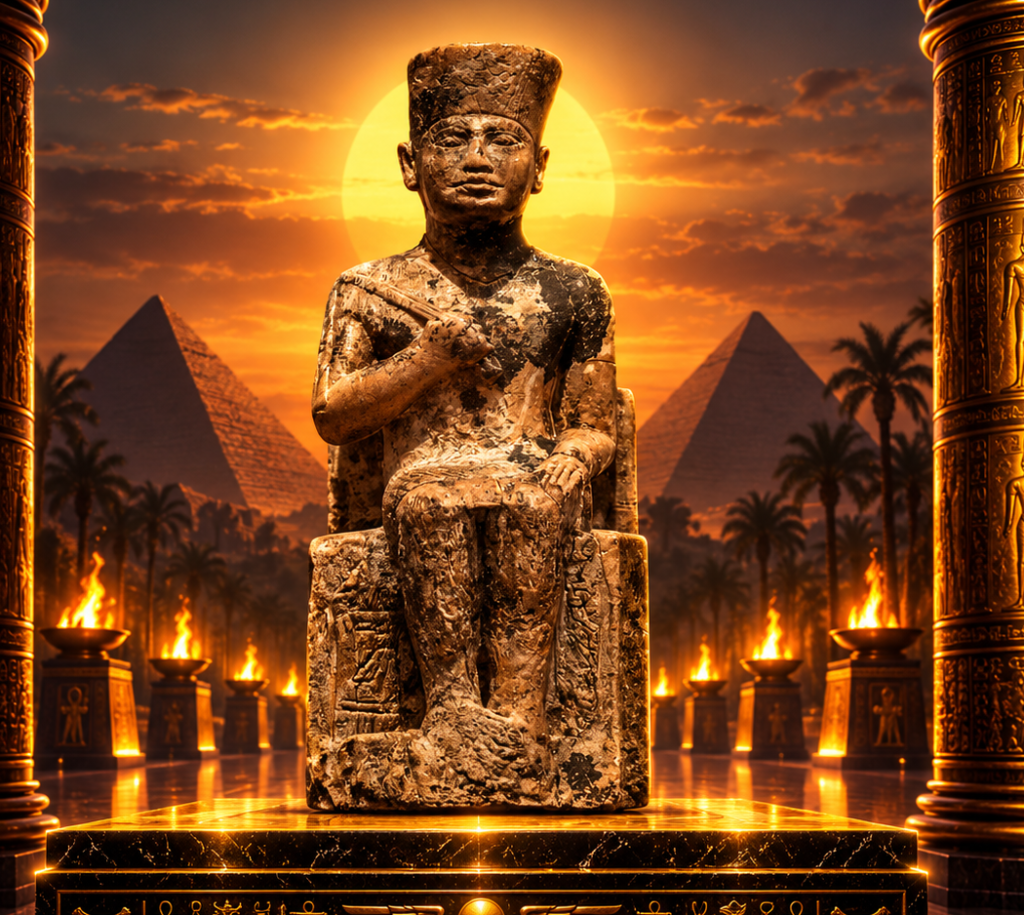
Known to the Greeks as Cheops, Khufu was a pharaoh of Egypt's Fourth Dynasty during the Old Kingdom. Although surprisingly little is known about Khufu himself, the extraordinary monument associated with his reign transformed the Giza Plateau and helped establish his name among the most famous rulers in ancient Egyptian history.
Yet Khufu's story extends beyond the Great Pyramid. His reign offers a fascinating window into royal authority, religion, engineering, labor, administration, and monumental architecture in one of Africa's most influential ancient civilizations.
Who Was Khufu?
Khufu was an ancient Egyptian pharaoh of the Fourth Dynasty, generally placed in the 26th century BCE. He succeeded his father, Sneferu, a ruler whose reign was particularly important to the development of pyramid construction.
Khufu's Egyptian name is commonly represented as Khnum-Khufu, traditionally interpreted along the lines of "Khnum protects me." The name invokes Khnum, an ancient Egyptian deity associated with creation and the Nile region.
Khufu became known as Cheops through later Greek traditions, particularly the writings of the Greek historian Herodotus.
Despite Khufu's fame today, surviving information about his personality and everyday activities is remarkably limited. His enormous pyramid became far more visible to history than the person who commissioned it.
That contrast has helped make Khufu one of ancient Egypt's most intriguing pharaohs.
Khufu and the Fourth Dynasty of Ancient Egypt
Khufu ruled during the Old Kingdom, an era famous for the development of some of ancient Egypt's most ambitious monumental architecture.
The Fourth Dynasty represents a particularly important stage in pyramid construction.
Before Khufu, Sneferu oversaw several monumental pyramid projects, including the Bent Pyramid and Red Pyramid at Dahshur. These structures reveal significant developments in the techniques required to create a true smooth-sided pyramid.
Khufu inherited a kingdom with considerable architectural knowledge, administrative organization, skilled craftspeople, and access to large labor forces.
Under his reign, these capabilities culminated in something unprecedented:
The Great Pyramid of Giza.
The Great Pyramid of Giza: Khufu's Monument to Eternity
The Great Pyramid of Giza, also called the Pyramid of Khufu, was constructed on the Giza Plateau near the Nile.
Originally standing at approximately 146.6 meters (481 feet) tall, the monument remained the tallest human-made structure on Earth for thousands of years.
Its scale is extraordinary.
The pyramid was constructed using an immense quantity of stone, with estimates commonly placing the number of blocks at roughly 2.3 million. Individual stones vary significantly in size and weight, while some of the granite components used within the monument are considerably heavier than typical limestone blocks.
The precision of the pyramid is equally remarkable.
Its four sides were carefully aligned with the cardinal directions, demonstrating the sophisticated surveying, mathematical, organizational, and observational abilities available to ancient Egyptian builders.
The structure was not simply an enormous pile of stone.
It was the centerpiece of an elaborate royal funerary complex designed around ancient Egyptian beliefs concerning kingship, death, transformation, and the afterlife.
How Was the Great Pyramid Built?
Exactly how Khufu's builders constructed the Great Pyramid continues to be studied and debated.
Researchers generally agree that its construction required sophisticated planning, transportation systems, surveying, quarrying, logistics, food production, skilled labor, and centralized administration.
Different theories have been proposed regarding the ramps and lifting techniques used during construction. No single reconstruction explains every stage of the building process with complete certainty.
Archaeological discoveries around Giza have nevertheless transformed our understanding of the people responsible for building the pyramids.
Evidence from settlements, cemeteries, food remains, administrative systems, and other archaeological material indicates that pyramid construction involved organized communities of workers, including skilled specialists and rotating labor forces.
This evidence challenges the popular image, heavily influenced by later traditions and modern entertainment, that the Great Pyramid was simply constructed by vast armies of enslaved people.
Instead, the archaeological picture reveals an enormous state-organized construction project supported by a complex workforce.
The Lost Diary That Revealed Khufu's Pyramid Network
One of the most extraordinary discoveries connected with Khufu's reign is the Diary of Merer.
Discovered at Wadi al-Jarf on Egypt's Red Sea coast, these ancient papyrus documents date to Khufu's reign and are among the oldest surviving papyri known from ancient Egypt.
Merer was an official responsible for a team of workers.
His records describe the transportation of limestone from the Tura quarries toward Akhet-Khufu, the ancient name associated with Khufu's Great Pyramid complex.
The documents provide remarkable evidence of the administrative and transportation networks operating during Khufu's reign.
Rather than explaining exactly how every stone was positioned on the pyramid, the papyri reveal something equally important: the logistical sophistication behind the project.
Workers transported construction materials through waterways connecting quarrying areas with the pyramid project.
The discovery provides a rare contemporary glimpse into the enormous system of people, materials, boats, waterways, administrators, and resources required to build Khufu's monument.
Inside the Great Pyramid of Khufu
The interior of the Great Pyramid contains a complex arrangement of corridors, chambers, shafts, and passages.
Among its best-known features are the:
- King's Chamber
- Queen's Chamber
- Grand Gallery
- Descending Passage
- Ascending Passage
- Subterranean Chamber
The so-called King's Chamber contains a granite sarcophagus, although Khufu's mummy has never been found.
Above the chamber are additional spaces that helped distribute the enormous weight of the masonry overhead.
Modern technologies have also revealed previously unknown spaces within the pyramid.
Muon imaging, a technique that detects naturally occurring cosmic particles, has allowed researchers to investigate the interior without damaging the monument. Such research has identified previously unknown voids, adding new questions to a structure that has been studied for centuries.
Their precise purposes remain subjects of continuing investigation.
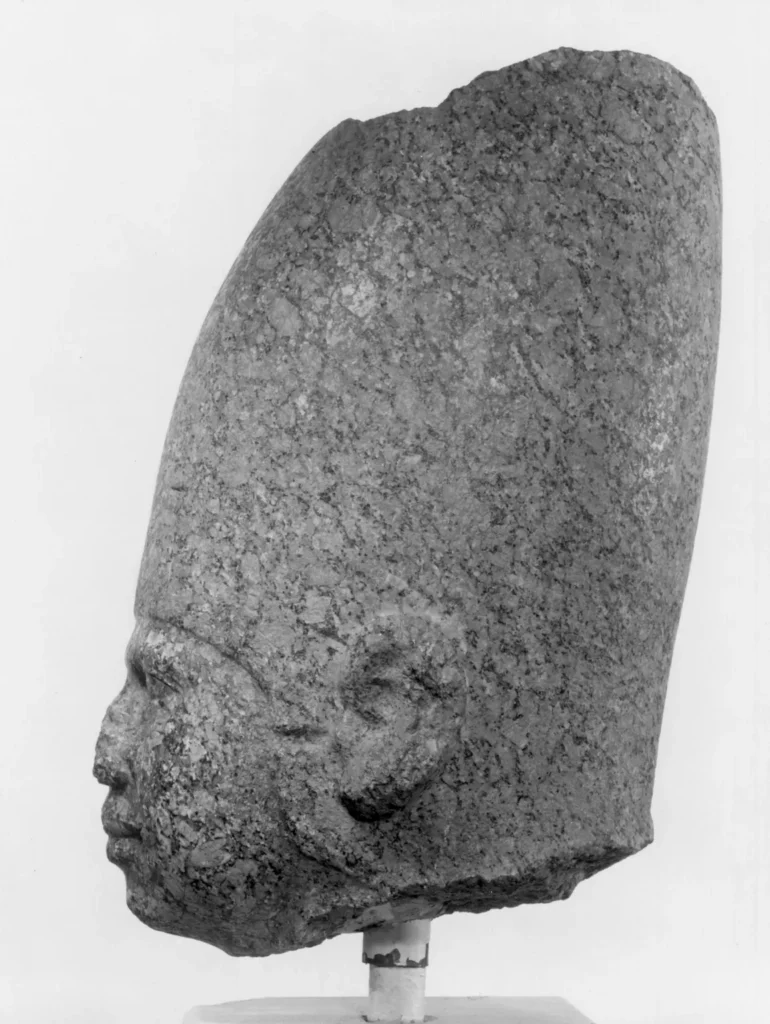
Why Did Khufu Build the Great Pyramid?
The Great Pyramid cannot be fully understood without considering ancient Egyptian religion and kingship.
Death was not necessarily viewed as absolute annihilation. Ancient Egyptian religious traditions developed elaborate ideas concerning continued existence, transformation, divine order, and the afterlife.
Royal tombs therefore carried profound religious and political significance.
The pyramid complex helped prepare the deceased king for his transition into the afterlife while reinforcing the sacred character of Egyptian kingship.
Khufu's pyramid was called Akhet-Khufu, commonly translated as the "Horizon of Khufu."
The name itself evokes ideas of emergence, transformation, and the horizon—an important symbolic space associated with the sun's daily cycle.
The Great Pyramid therefore represented more than architectural power.
It stood at the intersection of religion, royal authority, astronomy, landscape, engineering, and eternity.
The Tiny Statue of a Giant Pharaoh
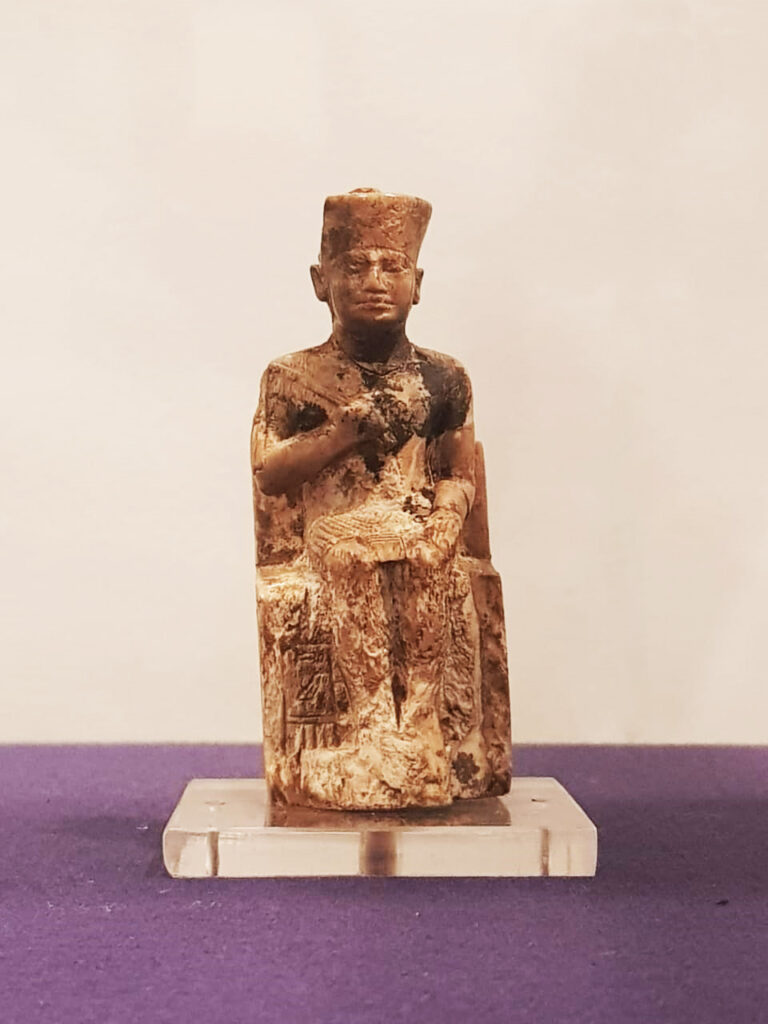
One of the fascinating ironies surrounding Khufu is that the ruler responsible for the largest pyramid in Egypt is represented by very few securely identified surviving royal images.
The most famous is a small ivory figurine associated with Khufu, discovered at Abydos.
It is only several centimeters tall.
The contrast is striking.
Khufu's pyramid rises dramatically over the Giza Plateau, yet one of the most recognizable objects associated with the king himself can fit into a person's hand.
This scarcity of surviving royal representations contributes to the mystery surrounding his appearance and personality.
We know Khufu primarily through inscriptions, archaeological evidence, later traditions, and—above all—the monument that bears his name.
Khufu's Family and Royal Dynasty
Khufu belonged to one of ancient Egypt's most important royal families.
His father, Sneferu, is closely associated with major developments in pyramid architecture. Khufu's mother is generally identified as Queen Hetepheres I, whose burial assemblage at Giza produced extraordinary examples of Old Kingdom royal craftsmanship.
Khufu was followed within the Fourth Dynasty by rulers including Djedefre and Khafre.
Khafre is associated with the second great pyramid at Giza, while Menkaure, another Fourth Dynasty ruler, constructed the third major pyramid.
Together, these monuments created the extraordinary pyramid landscape that defines Giza today.
The famous three-pyramid arrangement therefore represents multiple generations of Fourth Dynasty royal building rather than a single construction project.
Khufu's Boats and the Journey Beyond Death
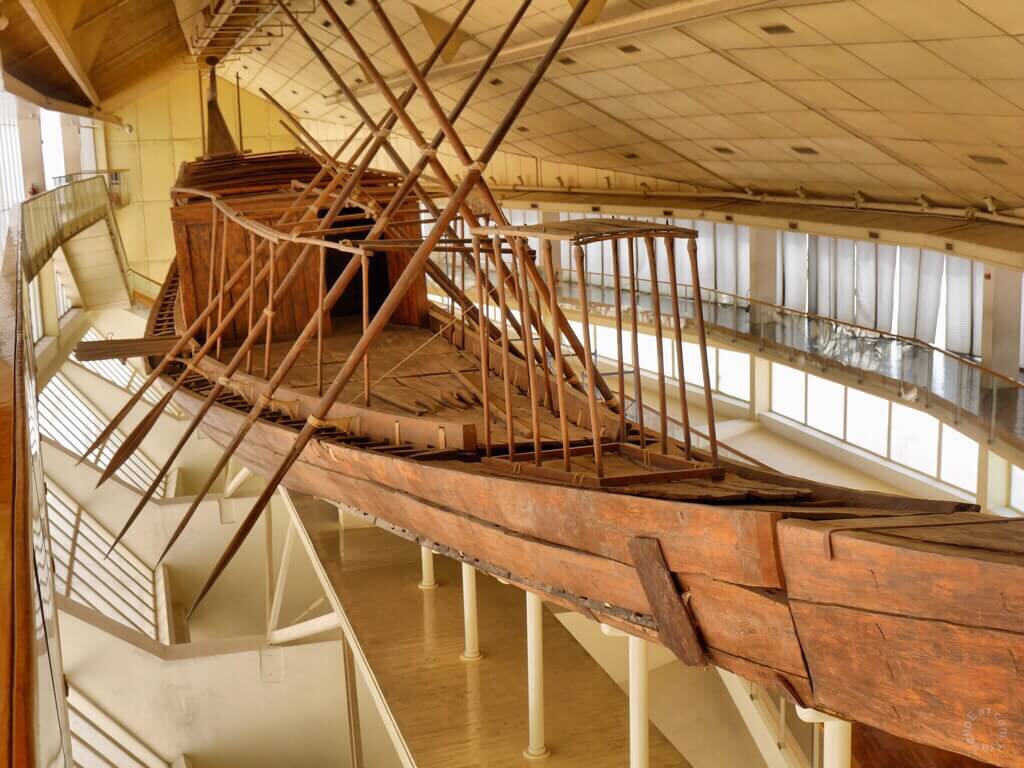
Another remarkable discovery associated with Khufu's pyramid complex was a large ancient Egyptian wooden vessel buried near the Great Pyramid.
Often called Khufu's ship or solar boat, the vessel was discovered dismantled in a pit beside the pyramid and later reconstructed.
Its exact ritual function has been debated.
Ships carried powerful practical and religious meanings in ancient Egypt. The Nile was central to transportation and daily life, while divine beings—including the solar deity—could be represented traveling across the heavens in sacred boats.
The vessel's placement beside Khufu's pyramid therefore connects the king's funerary complex with broader themes of movement, rebirth, royal ritual, and the journey into the afterlife.
Khufu and Ancient Egyptian Engineering
The Great Pyramid is often discussed as though its construction required a mysterious technology lost to history.
The archaeological evidence instead reveals something arguably more impressive:
Ancient Egyptians developed the knowledge and organizational systems necessary to accomplish the project themselves.
Building the Great Pyramid required expertise across numerous fields, including:
- Stone quarrying
- Masonry
- Surveying
- Transportation
- Mathematics
- Water management
- Woodworking
- Metalworking
- Food production
- Administration
- Workforce organization
Thousands of interconnected tasks had to operate effectively over many years.
The Great Pyramid should therefore be understood not simply as Khufu's personal achievement but as the product of the collective knowledge, labor, craftsmanship, engineering, and administrative power of ancient Egyptian society.
Ancient Egypt's African Setting
Understanding Khufu also requires understanding where his civilization developed.
Ancient Egypt emerged in northeastern Africa, with the Nile providing the environmental foundation around which communities, agriculture, transportation networks, religious traditions, and political institutions developed.
Khufu's kingdom was part of this ancient Nile Valley world.
The Great Pyramid itself was constructed using resources and labor networks connected across Egypt, while the kingdom interacted with surrounding African regions as well as neighboring areas beyond the continent.
Recognizing ancient Egypt's African geographical and historical setting provides essential context for understanding the civilization that produced Khufu and the monumental architecture of the Old Kingdom.
Mysteries Surrounding Khufu
Despite centuries of research, many questions remain.
Khufu's mummy has not been securely identified. His original burial goods largely disappeared in antiquity. We possess relatively little contemporary information describing his personality, and scholars continue investigating aspects of the Great Pyramid's construction and internal architecture.
Modern scanning technology has even revealed previously unknown spaces within the monument.
These unanswered questions make Khufu particularly fascinating.
But mystery should not be confused with absence of evidence.
Archaeology has revealed extensive evidence for quarrying, transportation, workforce settlements, administration, architectural development, and the religious culture surrounding pyramid construction.
New discoveries continue to refine that picture.
The Enduring Legacy of Pharaoh Khufu
Khufu probably could never have imagined the global reach his monument would eventually achieve.
More than four millennia after his reign, the Great Pyramid of Giza remains standing.
It is the oldest and only substantially surviving monument among the traditional Seven Wonders of the Ancient World.
Millions of people recognize its silhouette instantly.
Yet the pyramid's greatest legacy may not simply be its size.
It demonstrates what ancient Egyptian society could accomplish through generations of accumulated architectural knowledge, specialized craftsmanship, administration, planning, and coordinated labor.
Khufu's own voice has largely disappeared from history.
His monument has not.
Standing on the African landscape for more than 4,500 years, the Great Pyramid remains an extraordinary testament to the civilization of the ancient Nile Valley and to the people whose knowledge and labor transformed millions of pieces of stone into one of history's most enduring monuments.
Frequently Asked Questions About Khufu
Who was Khufu in ancient Egypt?
Khufu was a Fourth Dynasty pharaoh of ancient Egypt who ruled during the Old Kingdom in the 26th century BCE. He is most famous for commissioning the Great Pyramid of Giza.
Is Khufu the same person as Cheops?
Yes. Cheops is the Greek form traditionally used for Khufu's name.
What pyramid did Khufu build?
Khufu commissioned the Great Pyramid of Giza, the largest of the three major pyramids on the Giza Plateau.
How tall was Khufu's Great Pyramid?
The Great Pyramid originally stood approximately 146.6 meters, or 481 feet, tall. Loss of its outer casing and uppermost portions has reduced its present height.
Was the Great Pyramid built by enslaved people?
Archaeological discoveries point toward an organized workforce that included skilled specialists and rotating labor groups supported by a large state-run system. This evidence has challenged the popular portrayal of the pyramid as simply being built by enormous masses of enslaved workers.
Has Khufu's mummy ever been found?
No mummy has been securely identified as Pharaoh Khufu.
What was the ancient name of Khufu's pyramid?
Khufu's pyramid complex was known as Akhet-Khufu, commonly translated as "Horizon of Khufu."
Why is Khufu important today?
Khufu's reign produced the Great Pyramid, one of humanity's most famous surviving ancient monuments. The pyramid also provides extraordinary evidence of the architectural, engineering, administrative, and organizational capabilities of Old Kingdom Egypt.
Final Thoughts: Khufu and the Monument That Defied Time
Pharaoh Khufu remains one of the most recognizable yet mysterious rulers of ancient Egypt.
We know surprisingly little about the individual behind the crown, but the civilization of his era left something almost impossible to ignore.
The Great Pyramid.
It survived changing dynasties, foreign rulers, shifting religions, earthquakes, stone removal, exploration, excavation, and more than four thousand years of environmental exposure.
Today, Khufu's Great Pyramid of Giza remains a powerful monument to ancient Egypt's architectural knowledge and the extraordinary capabilities of the people of the Nile Valley.
Khufu sought permanence.
More than 4,500 years later, his horizon still stands.